Understanding ZKTeco Access Control Systems. Why the Right System and Installer Matter More Than Most People Think.
Many people think access control is simply about replacing keys with fingerprints or cards. But in real installations, especially in offices, schools, apartments, hospitals, estates, and commercial buildings, access control is much deeper than that.
A poorly selected system can create daily frustration:
- Doors refusing to open.
- Employees locked outside.
- Delayed attendance reports.
- Magnetic locks overheating.
- Glass doors vibrating because of wrong lock mounting.
- Facial recognition failing in poor lighting.
- Software constantly disconnecting from controllers.
This is why understanding the different categories of access control systems, door compatibility, and integration capabilities is important before installation begins.
Among the commonly used professional brands globally is ZKTeco, known for offering solutions ranging from small office access systems to enterprise-level biometric security platforms.
1. Standalone Access Control Systems. Simple, But Not Always Suitable For Growth.
Standalone systems are commonly installed in small offices, shops, salons, clinics, and residential premises because they are affordable and easy to deploy.
These systems usually store users directly inside the device itself. A fingerprint reader or card reader is mounted near the door and connected directly to a lock.
They work well where:
- Only one or two doors need control.
- There is no need for centralized monitoring.
- User traffic is low.
- Simplicity is preferred over advanced management.
However, many businesses later discover limitations when they expand.
For example:
- You may need to register the same user separately on multiple doors.
- Reporting capabilities become limited.
- Managing permissions across departments becomes difficult.
- Remote troubleshooting is minimal.
They are practical for small environments, but not ideal for growing organizations.
2. Networked Access Control Systems. Designed For Serious Security Management.
Once a building has multiple departments, floors, tenants, or staff categories, centralized control becomes important.
This is where networked access control systems become more suitable.
Instead of every door working independently, all controllers communicate through a centralized software platform. Security teams can monitor activity in real time from one location.
This type of setup is common in:
- Universities.
- Schools.
- Hospitals.
- Office blocks.
- Warehouses.
- Multi-tenant buildings.
- Factories.
The biggest advantage is visibility and control.
A manager can:
- Restrict access to certain departments.
- Create time-based access schedules.
- Monitor staff movement.
- Disable lost cards instantly.
- Generate security reports.
- Control multiple branches remotely.
In large organizations, this becomes more than security. It becomes part of operational management.
3. Biometric Access Control Systems. Solving The Problem Of Shared Cards And Impersonation.
Traditional card systems are convenient, but they have one major weakness — cards can be shared.
In workplaces where attendance accuracy matters, biometric systems help solve this problem.
These systems use:
- Fingerprints.
- Facial recognition.
- Palm recognition.
- Vein scanning technologies.
The goal is simple: The person accessing the door must physically be present.
Biometric systems are now widely used in:
- Schools.
- Government offices.
- Factories.
- Construction sites.
- Financial institutions.
- Data centers.
Facial recognition systems have especially become popular because they allow contactless authentication, which is faster in high-traffic environments.
However, biometric systems also require proper planning:
- Lighting conditions affect facial recognition.
- Dirty fingers affect fingerprint reading.
- Device placement affects user experience.
- Network speed affects response time.
This is why installation quality matters heavily.
4. RFID And Card Access Systems. Fast And Convenient For High Traffic Areas.
Card-based systems remain one of the most practical solutions for environments with many users.
Why?
Because tapping a card is faster than entering passwords or repeatedly scanning fingerprints.
These systems are common in:
- Apartment entrances.
- Hotels.
- Parking systems.
- Office reception areas.
- Shared commercial buildings.
Their main advantage is speed and convenience.
But poor-quality systems often create security loopholes:
- Duplicate cards.
- Weak encryption.
- Poor reader response.
- Frequent communication failure.
In professional installations, card technology selection matters as much as the reader itself.
Different Doors Require Different Access Control Approaches.
One mistake many inexperienced installers make is assuming every lock works on every door.
That is not true.
The door material, frame structure, traffic level, and emergency safety requirements all affect lock selection.
Glass Doors.
Glass doors are among the most sensitive installations because improper mounting can weaken the glass or create unstable locking pressure.
They commonly use:
- Frameless magnetic locks.
- Drop bolt locks.
- Specialized glass brackets.
Poor installation often results in:
- Vibrating doors.
- Weak holding force.
- Misalignment.
- Lock stress.
Wooden Doors.
Wooden doors are easier to work with, but lock type still matters.
Some installations require:
- Electric strikes.
- Mortise locks.
- Magnetic locks.
The door swing direction, frame depth, and user traffic all influence hardware selection.
Metal Doors.
Metal doors are common in factories, server rooms, warehouses, and secure facilities.
These require stronger locking systems because of:
- Heavier door weight.
- High-frequency usage.
- Increased security demands.
Heavy-duty electric strikes and industrial magnetic locks are commonly used.
Access Control And Time Attendance Integration.
Modern access control systems are no longer isolated security tools.
They are increasingly integrated with:
- HR systems.
- Payroll software.
- Attendance management platforms.
- Visitor management systems.
This allows organizations to:
- Track lateness automatically.
- Generate attendance reports.
- Monitor overtime.
- Control unauthorized access.
- Improve accountability.
For schools and factories especially, this integration becomes extremely valuable because attendance records directly affect operations.
Why Experienced Technicians Matter More Than The Equipment Itself.
Many access control failures are not caused by the brand.
They are caused by poor installation decisions.
An experienced technician understands:
- Lock holding force calculations.
- Power supply balancing.
- Fire safety compliance.
- Emergency exit behavior.
- Cable voltage drop.
- Network communication stability.
- Backup battery sizing.
- Door alignment precision.
Without proper expertise, even expensive systems become unreliable.
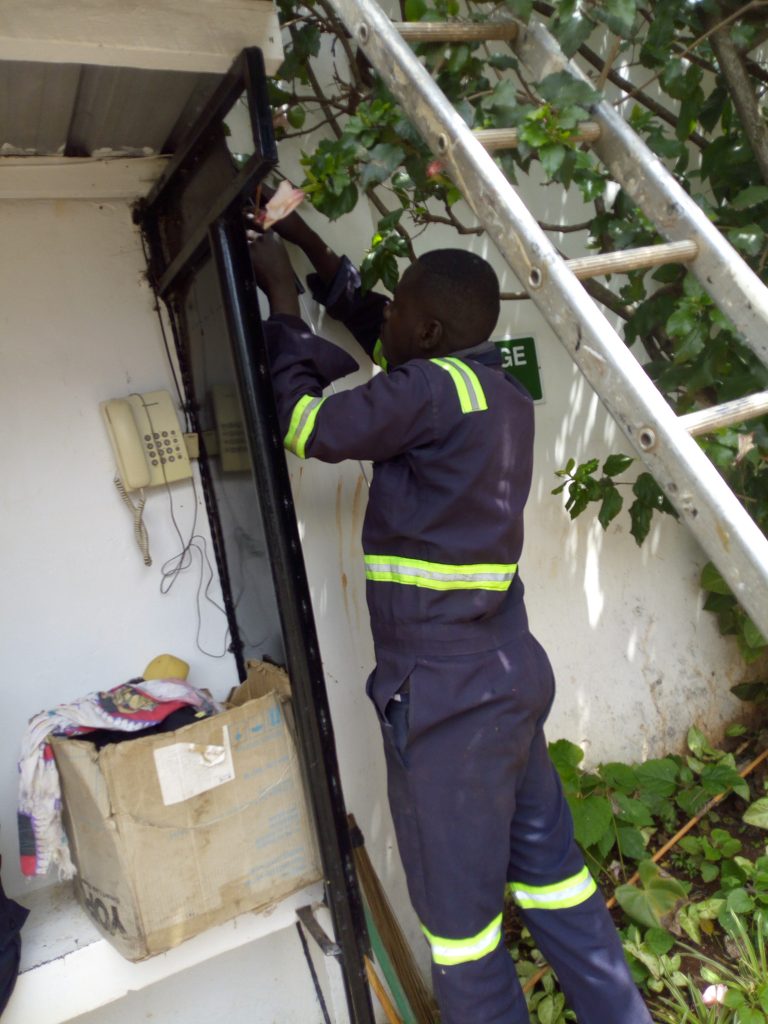
This is why professional installation is not simply about mounting devices on walls. It is about understanding how people move through spaces, how buildings behave electrically, and how security systems interact with daily operations.
Final Thoughts.
A good access control system should feel invisible during normal operation — smooth access, fast response, reliable reporting, and stable performance every day.
Achieving that reliability depends on:
- Choosing the right category of system.
- Matching hardware to the correct door type.
- Proper software integration.
- Professional installation standards.
At , we design and install professional access control and biometric security systems tailored for offices, schools, apartments, warehouses, institutions, and commercial facilities across Kenya.