
Managed CCTV as a Service in Kenya and Internationally: Centralized CCTV Monitoring, Management and Support
CCTV cameras are now a key part of security for businesses, institutions and organizations. However, installing cameras is only the beginning. The bigger challenge starts when a company has CCTV cameras at many branches, stores, warehouses, construction sites, offices or facilities. As the number of locations grows, it becomes harder to know whether every camera is working, whether every recorder is recording, whether storage is healthy and whether remote sites can still communicate with the central CCTV system.
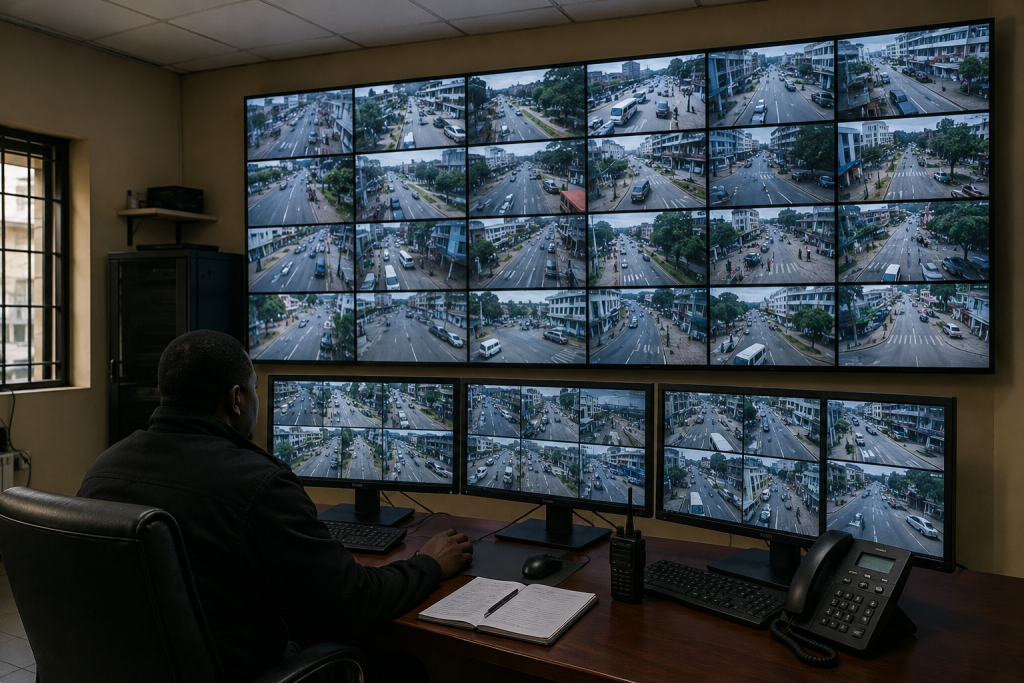
This is where managed CCTV services can make a major difference. Boardtac Solutions provides a professional approach to CCTV as a Service, helping organizations monitor, manage, troubleshoot and maintain CCTV infrastructure across multiple locations.
Our approach have supported organizations in Kenya as well as companies with CCTV systems distributed across several countries. Instead of treating every CCTV installation as a separate system, we help organizations move towards a centralized CCTV management environment. The result is a more structured way to manage cameras, recorders, networks, connectivity, faults, maintenance and CCTV access.
For an organization with locations in Kenya, Tanzania, the United Arab Emirates, Spain and Georgia, for example, the goal can be to give authorized teams at the international headquarters a central view of the connected CCTV environment. That is the difference between simply owning CCTV cameras and having a managed CCTV infrastructure.
What Is CCTV as a Service?
CCTV as a Service is a managed approach to video surveillance. Instead of installing cameras and leaving each branch or site to manage it’s own CCTV system, an organization can work with a technical partner to manage the CCTV environment as an ongoing service.
Depending on the organization’s requirements, a managed CCTV service can include:
- CCTV infrastructure assessment.
- CCTV installation and integration.
- Centralized CCTV monitoring.
- Remote CCTV health monitoring.
- Camera status monitoring.
- DVR and NVR monitoring.
- CCTV recording checks.
- Network and connectivity troubleshooting.
- CCTV fault identification.
- Remote technical support.
- Preventive maintenance.
- Equipment troubleshooting.
- Equipment replacement coordination.
- Fault escalation.
- CCTV ticketing and incident management.
- Footage retrieval support.
- User and access management.
- CCTV system reporting.
- Cloud CCTV backup.
- AI video analytics.
The exact service depends on the organization’s size, CCTV equipment, locations, connectivity and security requirements. The main objective remains the same:
Keep the CCTV environment visible, operational, supportable and scalable.
Why CCTV Management Becomes Difficult as a Company Grows.
A small business with one location may have a relatively simple CCTV system. The cameras connect to a recorder. Staff can view the cameras locally. If a camera stops working, someone notices and reports the problem.
That model becomes harder to manage when the organization has multiple locations.
Consider a company with:
- 100 branches.
- 20 warehouses.
- 50 retail stores.
- Several construction sites.
- Offices in different cities.
- Operations in different countries.
Each location may have cameras, recorders, storage, switches, routers, internet connectivity and power equipment. Suddenly, CCTV is no longer just a camera installation. It becomes a distributed technology infrastructure.
A camera can go offline.
An NVR can stop recording.
A hard drive can fail.
A router can lose connectivity.
An internet connection can go down.
A power problem can affect CCTV equipment.
A site can become unreachable from the central office.
The difficult part is often not fixing the problem.
The difficult part is knowing that the problem exists and identifying what caused it.
From Reactive CCTV Maintenance to Proactive CCTV Management.
Traditional CCTV support often starts after someone notices a problem. For example, a manager may need footage from Monday’s incident. The team checks the system and discovers that one camera stopped recording three days earlier.
By then, the opportunity to capture important footage may have been lost.
A managed CCTV approach aims to identify problems earlier.
Instead of waiting for a branch to say, “The camera is not working,” the technical team can have greater visibility of the CCTV environment and investigate systems that require attention.
This changes the operating model from:
Something breaks → someone notices → someone reports it → technician investigates.
Towards:
CCTV health is monitored → an issue is identified → the technical team investigates → corrective action is tracked.
This proactive approach can reduce downtime and improve accountability.
Boardtac’s proposed centralized CCTV approach specifically focuses on moving organizations from reactive CCTV maintenance towards proactive CCTV management.
What Does a Managed CCTV Service Include?
A professional managed CCTV service should look beyond the camera itself.
At Boardtac Solutions, we consider the CCTV system as a complete environment.
That environment includes the cameras, recording equipment, storage, network infrastructure, connectivity, power and central management platform.
1. CCTV Equipment and Hardware Management
CCTV equipment can fail for many reasons.
Common problems include:
- Camera failure.
- DVR failure.
- NVR failure.
- Hard disk failure.
- Power adaptor failure.
- Power supply failure.
- UPS problems.
- Voltage protection problems.
- Display or monitor failure.
- Network equipment failure.
- Damaged cables.
- Other CCTV accessories failing.
When equipment fails, the first step should be to identify the actual cause.
Replacing a camera may not solve a problem if the real issue is network connectivity or power.
Likewise, replacing an NVR may not solve an outage caused by an internet or network problem.
Boardtac’s approach considers the wider CCTV environment before recommending corrective action.
Our support can include fault identification, troubleshooting, maintenance coordination and equipment replacement where required.
The managed environment can cover cameras, DVRs, NVRs, surveillance storage, power equipment, UPS systems, voltage protection, displays, CCTV network equipment and related accessories.
2. Network and CCTV Connectivity Management
CCTV depends heavily on reliable connectivity.
A camera may be working correctly at a remote location but still appear offline at headquarters.
Why?
The router may have lost connection.
The internet service may have stopped.
A network cable may have failed.
A switch may have a problem.
Power may have gone off.
The network configuration may have changed.
The connection may simply be unstable.
Therefore, CCTV support requires knowledge of both surveillance technology and network infrastructure.
Boardtac can investigate the connectivity path between remote CCTV sites and the central management environment.
This helps the technical team separate CCTV equipment problems from network problems.
That distinction matters because it can prevent unnecessary equipment replacement and unnecessary site visits.
3. Centralized CCTV Management
Centralized CCTV management brings multiple CCTV locations into a controlled management environment.
Instead of opening separate systems for every location, authorized personnel can manage connected CCTV systems through a central platform where the technology supports the required integration.
The central platform can provide visibility into connected sites and devices.
It can also help technical teams identify systems that require attention.
For organizations with many locations, this creates a much simpler management model.
The company can manage CCTV as one wider environment rather than as dozens or hundreds of isolated installations.
4. Centralized CCTV Monitoring
Centralized monitoring allows authorized personnel to view connected CCTV systems from a central location.
That location could be:
- Company headquarters.
- A regional office.
- A security control room.
- A security operations centre.
- An authorized monitoring workstation.
The monitoring environment can allow users to move between different locations and view cameras according to their permissions.
This can be particularly useful for companies with branches, stores, warehouses and remote sites.
It also creates a stronger foundation for centralized security operations.
5. CCTV Health Monitoring
A CCTV camera that cannot record when an incident happens has limited value.
For this reason, CCTV health monitoring is one of the most important parts of a managed CCTV service.
Health monitoring can help technical teams identify issues such as:
- Cameras going offline.
- Recorders becoming unavailable.
- Sites becoming unreachable.
- Recording problems.
- Network communication problems.
- Storage problems.
- Other device or system issues.
The exact health checks and alerts depend on the CCTV equipment and management platform.
The goal, however, is straightforward:
Know about CCTV problems before someone needs the footage.
6. CCTV Fault Management
Finding a problem is only the first step.
The organization also needs a process for resolving it.
Suppose a camera goes offline at a warehouse in Kenya.
The technical team needs to know:
- Which site has the problem?
- Which device is affected?
- When did the problem start?
- Is the issue related to the camera?
- Is the recorder affected?
- Is the network available?
- Is the site reachable?
- Does the issue require a remote fix?
- Does a technician need to visit?
- Does equipment need replacement?
A managed CCTV service creates a structured process around these questions.
7. CCTV Ticketing and Incident Management
Technology becomes much more useful when a company also has a clear support process.
Boardtac can integrate CCTV support with a structured ticketing and incident-management process.
For example, a CCTV issue may be recorded as:
Location: Nairobi warehouse.
Problem: Camera offline.
Time reported: 10:30 AM.
Investigation: Technical team checks the CCTV and network environment.
Action: Issue escalated for corrective maintenance.
Resolution: Camera restored.
Status: Closed.
This approach creates a record of what happened.
Over time, management can also identify recurring problems, equipment that fails often, locations with repeated network problems and areas that may require preventive maintenance.
Boardtac’s proposed model includes ticketing and incident tracking from the time a CCTV fault is reported through to resolution.
Managing CCTV Across Multiple Countries
International organizations face an even greater challenge.
A company may have CCTV systems in several countries.
For example, it may operate in:
- Kenya.
- Tanzania.
- Uganda.
- Rwanda.
- United Arab Emirates.
- Spain.
- Georgia.
- Other international markets.
Each country may have different sites, internet providers, networks, technical teams and CCTV equipment.
Yet the organization may want its headquarters to maintain centralized visibility.
This is where multi-country CCTV management becomes valuable.
A Real-World Multi-Country CCTV Integration Example
Consider an organization with its central CCTV management environment at its headquarters in Georgia.
The organization operates CCTV systems in:
- Georgia.
- United Arab Emirates.
- Kenya.
- Spain.
- Tanzania.
The Kenyan operation may already have CCTV cameras and recording equipment.
The organization does not necessarily want to create another completely separate CCTV environment in Kenya.
Instead, the requirement may be to integrate the Kenyan CCTV system into the organization’s existing international CCTV management environment in Georgia.
That means the Kenyan site needs to work as part of the wider CCTV environment.
This type of requirement is very different from simply installing cameras.
The technical team must first understand the existing CCTV equipment and network environment.
Then, the team can determine the appropriate integration approach.
Boardtac Solutions has practical experience with this type of requirement. Our project work has included a Kenya-based CCTV environment and an international Hikvision CCTV management environment headquartered in Georgia.
The important point is that the local CCTV system becomes part of a wider management strategy.
One Platform for Multiple CCTV Locations
Imagine a company with:
Kenya → CCTV system
Tanzania → CCTV system
United Arab Emirates → CCTV system
Spain → CCTV system
Georgia → Headquarters
Instead of managing every location independently, the organization can work towards a centralized management model.
Authorized users at headquarters can then have a central point from which to manage connected CCTV systems.
The exact architecture depends on the organization’s equipment, network, security policies, connectivity and existing platforms.
For that reason, Boardtac does not recommend a one-size-fits-all approach.
We assess the environment first.
Can Existing CCTV Cameras Be Integrated?
In many cases, organizations do not need to replace every camera.
This is an important consideration for companies that have already invested heavily in CCTV.
A company may already have hundreds of cameras, several NVRs and years of investment in its surveillance infrastructure.
Replacing everything may not make financial or technical sense.
Instead, Boardtac can assess the existing environment and determine:
- What can remain.
- What can integrate.
- What requires improvement.
- What needs configuration.
- What requires replacement.
- What network changes may be needed.
- What additional equipment may be required.
Where organizations already use Hikvision equipment, continuing within the Hikvision ecosystem can provide a practical path towards centralized management where technically suitable.
This approach can protect existing investments while creating a more centralized CCTV environment.
Why Hikvision CCTV Integration Matters
Many organizations already use Hikvision cameras, DVRs and NVRs.
As a result, they may not want to introduce another completely different CCTV ecosystem.
Where the existing environment supports it, continuing with compatible Hikvision technologies can simplify centralized management.
It can also help organizations make better use of equipment they already own.
Boardtac can assess existing Hikvision infrastructure and determine how it can fit into the organization’s wider CCTV management requirements.
The goal is not to recommend new equipment simply for the sake of replacing existing equipment.
The goal is to build the most practical solution around the organization’s actual environment.
Remote CCTV Monitoring and Support
One of the biggest benefits of managed CCTV is remote support.
Consider a remote branch in Kenya.
The CCTV system suddenly becomes unavailable.
Without centralized support, someone at the branch may have to investigate the issue or call a local technician.
With a managed service, the technical team can first investigate remotely.
The problem may turn out to be a network outage.
It could be a recorder problem.
It could be power-related.
It could be a connectivity issue.
It could be a camera failure.
If the problem can be resolved remotely, the organization may avoid a physical site visit.
If a technician needs to attend the site, the technical team can often provide better information about what needs investigation before the technician travels.
This can save time and improve the support process.
Centralized CCTV Footage Retrieval
Centralized CCTV management can also make footage retrieval easier.
Suppose an incident occurs at a branch in Kenya.
An authorized user at headquarters may be able to access the relevant CCTV system remotely, subject to connectivity, permissions and the organization’s policies.
The user can then search for the required recording and retrieve the footage where the platform supports that function.
This can reduce the need to send someone to the physical location simply to search for footage.
Boardtac’s proposed centralized model includes remote access to connected CCTV systems and support for footage retrieval where the environment and permissions allow it.
Preventive CCTV Maintenance
A CCTV system should not only receive attention after it fails.
Preventive maintenance can help organizations identify equipment and infrastructure that may require attention before a major failure occurs.
This can include reviewing:
- Camera condition.
- Recording equipment.
- Storage.
- Network equipment.
- Power protection.
- Connectivity.
- Physical installation.
- Other CCTV components.
For companies with many locations, preventive maintenance becomes even more important.
A managed CCTV service can provide a structured maintenance process instead of relying only on emergency repairs.
Optional Local CCTV Backup
Some organizations want additional protection for recorded footage.
One option is to deploy additional local storage or backup infrastructure at selected sites.
This can provide another layer of protection without requiring the organization to move all recording into the cloud.
Boardtac’s proposed architecture includes an optional local backup model where selected stations can use dedicated local computing and storage as an additional layer.
This approach can be useful for organizations that want additional redundancy while controlling recurring cloud storage costs.
Optional Cloud CCTV Backup
Cloud CCTV backup provides another option.
Instead of relying only on the recorder at a physical site, selected CCTV footage can also be stored remotely.
Cloud backup can be useful when an organization wants additional protection for important footage.
However, cloud storage creates recurring costs.
The cost depends on factors such as:
- Number of cameras.
- Camera resolution.
- Recording method.
- Retention period.
- Storage capacity.
- Required bandwidth.
For this reason, organizations do not always need to put every camera in the cloud.
A hybrid approach can make sense.
For example, critical cameras can receive additional cloud backup while other cameras continue using local recording.
Boardtac can help organizations assess which approach makes sense for their CCTV environment.
AI CCTV Analytics
Modern CCTV can do more than record video.
Depending on the camera and platform, organizations can add video analytics that help turn CCTV footage into useful operational information.
Examples include:
- Smart motion detection.
- People counting.
- License plate recognition.
- PPE monitoring.
- Other video analytics.
For example, a construction company may want to monitor PPE compliance.
A logistics company may want better visibility of vehicle movements.
A retail business may want people-counting capabilities.
A property manager may want better control of access and movement around a property.
AI analytics should support a real business need.
Boardtac can help organizations assess where analytics may provide value instead of adding features without a clear purpose.
Industries That Benefit From Managed CCTV Services
Managed CCTV is not limited to one type of business.
In fact, many industries can benefit when they have multiple locations or large CCTV environments.
Logistics and Transport Companies
Logistics companies often operate warehouses, depots, distribution centres, truck yards, loading areas and offices.
A logistics company may have CCTV across many sites.
Centralized CCTV management can help the security and technical teams maintain visibility across those locations.
This can support monitoring of:
- Loading and unloading.
- Vehicle movement.
- Warehouse activity.
- Entry and exit points.
- Parking areas.
- Storage facilities.
- Remote depots.
For a logistics company, losing CCTV at a busy depot can create a serious operational gap.
Managed CCTV helps the organization identify and address such issues faster.
Banks and Financial Institutions
Banks can operate CCTV across branches, offices, ATM locations and other facilities.
Financial institutions also tend to have strict security requirements.
A centralized CCTV environment can help authorized security and technical teams manage distributed surveillance infrastructure more efficiently.
Boardtac can support CCTV monitoring, health checks, troubleshooting, maintenance and incident management for organizations with distributed CCTV environments.
Construction Companies
Construction companies are another strong use case.
A construction company may have several active projects at the same time.
Each site can have:
- Site entrances.
- Equipment yards.
- Material storage areas.
- Temporary offices.
- Parking areas.
- Perimeter cameras.
- Remote CCTV systems.
Construction sites also change quickly.
Cameras may need to move as construction progresses.
Connectivity may change.
Power arrangements may change.
As a result, the CCTV environment needs ongoing attention.
Managed CCTV can help construction companies maintain visibility across multiple active projects.
Property Management Companies
Property managers often manage CCTV for many buildings.
Their portfolio may include:
- Apartment buildings.
- Office blocks.
- Shopping centres.
- Industrial properties.
- Warehouses.
- Gated communities.
- Parking facilities.
- Mixed-use developments.
A property management company may therefore manage hundreds of cameras across many properties.
A centralized CCTV management approach can make it easier to understand the health of the CCTV environment and coordinate maintenance.
Retail Chains and Supermarkets
Retail businesses can have CCTV across dozens or hundreds of stores.
Each store may have its own cameras and recorder.
As the business grows, managing each store independently can become difficult.
Centralized CCTV management can give the security and technical teams a broader view of the branch network.
This is useful for:
- Supermarkets.
- Shopping outlets.
- Convenience stores.
- Fashion retailers.
- Electronics stores.
- Wholesale stores.
- Fuel stations.
Warehousing and Distribution Companies
Large warehouses can have many cameras covering loading docks, storage areas, entrances, yards and other operational zones.
Companies with several warehouses can benefit from a centralized CCTV strategy.
Boardtac can help assess how existing warehouse CCTV systems can connect into a wider managed environment.
Manufacturing and Industrial Companies
Manufacturing companies often need CCTV across large facilities.
Cameras may cover:
- Production areas.
- Warehouses.
- Loading bays.
- Perimeters.
- Employee entrances.
- Vehicle entrances.
- Parking areas.
- Sensitive operational areas.
Centralized CCTV management can help industrial organizations maintain visibility of surveillance systems across their facilities.
Hotels and Hospitality Groups
Hotel groups may operate multiple properties in different cities or countries.
Each hotel may have its own CCTV system.
A managed CCTV service can provide a more consistent way to support CCTV across the hotel portfolio.
This can be especially useful for hospitality groups operating across Kenya, Tanzania, the UAE and other markets.
Schools and Universities
Large schools and universities may have CCTV across campuses, buildings, gates, parking areas, laboratories and other facilities.
Institutions with multiple campuses can benefit from centralized management and structured CCTV maintenance.
Healthcare Organizations
Hospitals and healthcare groups may have CCTV across several facilities.
A managed approach can help their technical teams monitor and maintain distributed CCTV infrastructure while following the organization’s access and security policies.
Fuel Stations and Energy Companies
Fuel stations often operate as geographically distributed sites.
An energy company may have CCTV across dozens of locations.
Centralized CCTV management can help the organization maintain greater visibility across those sites without depending entirely on each local team to identify problems.
Corporate Organizations With Multiple Offices
Large companies often have offices in several cities and countries.
Their CCTV environment can grow over time as new offices and facilities open.
A managed CCTV service can help create a consistent approach across those locations.
Security Companies and Security Operations Centres
Security companies can also benefit from centralized CCTV management.
They may manage CCTV for many customers or operate monitoring centres for their clients.
A professional CCTV management platform can form part of a wider security operations model.
Government and Public-Sector Organizations
Public-sector organizations can have CCTV across many facilities and locations.
Depending on their security policies and applicable requirements, centralized CCTV management can help them manage distributed surveillance infrastructure more efficiently.
Examples can include:
- Government offices.
- Public facilities.
- Transport facilities.
- Regional offices.
- Depots.
- Storage facilities.
Who Needs Managed CCTV the Most?
The strongest candidates usually have one or more of these characteristics:
- Many CCTV cameras.
- Multiple branches.
- Multiple buildings.
- Remote locations.
- Multiple countries.
- Limited internal CCTV technical resources.
- Frequent CCTV failures.
- Frequent network problems.
- A need for central monitoring.
- A need for faster fault identification.
- A need for centralized footage access.
- A need for structured CCTV maintenance.
- A need to protect existing CCTV investments.
If your organization matches several of these points, managed CCTV may be worth considering.
Boardtac Solutions’ CCTV Capability Methodology
Boardtac does not start by saying, “Replace everything.”
We start by understanding the environment.
Our methodology follows a structured process.
Step 1: Assess the Existing CCTV Infrastructure
First, we look at the existing environment.
This can include:
- Cameras.
- DVRs.
- NVRs.
- Storage.
- Network infrastructure.
- Internet connectivity.
- Power protection.
- Existing CCTV faults.
- Offline sites.
- Equipment condition.
This assessment gives us a clearer picture of the organization’s current CCTV environment.
Step 2: Identify and Stabilize Problems
Before centralizing CCTV, it makes sense to understand existing problems.
We identify sites that are offline.
We identify equipment that needs attention.
We investigate connectivity problems.
We identify infrastructure that may require improvement.
This creates a stronger foundation for centralization.
Boardtac’s proposed implementation approach places assessment and stabilization before full centralization.
Step 3: Plan the Centralized Environment
Next, we determine how the selected locations can connect to the central CCTV management environment.
The approach depends on:
- Existing CCTV equipment.
- Existing management platforms.
- Network connectivity.
- Security requirements.
- Number of cameras.
- Number of locations.
- User requirements.
- Recording requirements.
We then design an approach that fits the organization.
Step 4: Integrate the CCTV Locations
The selected locations can then be progressively connected to the centralized environment.
A phased approach can reduce disruption.
It can also allow the organization to test and stabilize the environment before adding more sites.
Step 5: Move Into Managed CCTV Support
Once the environment is centralized, the organization can move towards ongoing managed CCTV services.
Depending on the agreement, Boardtac can provide:
- Remote CCTV monitoring.
- CCTV health checks.
- Network troubleshooting.
- Equipment troubleshooting.
- Fault escalation.
- Maintenance coordination.
- Equipment replacement support.
- Footage retrieval support.
- User management.
- Ticketing.
- Incident tracking.
- Reporting.
This creates a long-term support model rather than a one-time installation.
A Three-Phase CCTV Centralization Model
For larger organizations, Boardtac can structure the project into three main phases.
Phase 1: Assessment and Stabilization
We assess the CCTV and network environment.
We identify equipment, cameras, storage, connectivity, power protection, faults and offline locations.
Then, we stabilize the environment where necessary.
Phase 2: Centralization
We establish or work with the organization’s central CCTV management environment.
Selected locations then connect progressively to the central platform.
This can include the central server or platform, licensing where required, network configuration, user management and monitoring workstations.
Phase 3: Managed CCTV Services
Once the environment is operating centrally, Boardtac can provide ongoing technical support.
This can include monitoring, health checks, troubleshooting, maintenance, fault escalation, ticketing and reporting.
Why Centralized CCTV Management Matters
Centralization is not simply about putting cameras on one screen.
It creates a different way of managing CCTV.
Instead of asking:
“Does this branch have CCTV?”
management can ask:
“What is the health of our entire CCTV environment?”
Instead of asking:
“Which branch reported a problem?”
the technical team can work towards identifying systems that require attention.
Instead of sending technicians everywhere immediately, the team can investigate problems remotely first.
Instead of keeping CCTV faults in informal conversations, the organization can track them through a structured support process.
That is the real value of managed CCTV.
The Benefits of Managed CCTV as a Service
A well-managed CCTV environment can provide several benefits.
Centralized visibility
Authorized users can have a central view of connected CCTV locations.
Faster fault identification
Technical teams can identify problems earlier.
Better remote support
Teams can investigate many problems without immediately travelling to the site.
Reduced downtime
Earlier detection can help reduce the time that cameras or recording systems remain unavailable.
Better maintenance
Organizations can move towards preventive rather than purely reactive maintenance.
Better accountability
Ticketing and incident tracking provide a record of reported problems and corrective action.
Better use of existing CCTV investments
Organizations can assess existing infrastructure before deciding what needs replacement.
Easier footage retrieval
Authorized users may be able to access footage remotely where the system supports it.
Scalability
A centralized approach can provide a foundation for adding more branches and locations.
International visibility
Organizations with CCTV across several countries can work towards centralized management across their international environment.
Boardtac’s proposed centralized CCTV model specifically targets centralized visibility, faster identification of problems, better use of existing Hikvision infrastructure, controlled footage access, structured fault management and scalability.
CCTV Is More Than Cameras
This is perhaps the most important point.
A CCTV system is not only a collection of cameras.
It is an infrastructure environment.
It includes:
Cameras + Recording + Storage + Network + Connectivity + Power + Management + Support.
If any important part of that chain fails, the organization’s CCTV capability can suffer.
That is why Boardtac Solutions approaches CCTV from an infrastructure and managed-services perspective.
We look at the complete environment.
CCTV as a Service for Kenyan Companies
Kenya has many organizations operating across multiple locations.
A company may have its headquarters in Nairobi and branches in Mombasa, Kisumu, Nakuru, Eldoret and other areas.
A logistics company may have warehouses and depots across the country.
A bank may have branches in many towns.
A construction company may have projects in different counties.
A property management company may manage buildings across several cities.
A retail chain may operate dozens of stores.
Managing all those CCTV systems separately can become difficult.
Managed CCTV provides another option.
Instead of relying on every branch to manage its own CCTV problems, the organization can establish a centralized support and monitoring model.
CCTV for International Companies Operating in Kenya
Kenya can also form part of a much larger international CCTV environment.
An international company may already have a central CCTV platform at its headquarters.
When the company opens or expands operations in Kenya, it may want the Kenyan CCTV environment to become part of the existing platform.
That requirement needs careful planning.
The local CCTV infrastructure must work with the wider organization’s requirements.
The network must support the required connectivity.
The equipment must be assessed.
Access must be controlled.
The central platform must provide the appropriate visibility.
Boardtac can help organizations assess this type of requirement and determine the appropriate path for integrating local CCTV infrastructure into an existing international management environment.
Our Experience With Distributed CCTV Environments
Boardtac Solutions’ experience includes working with geographically distributed CCTV environments where the objective is to move away from isolated site-by-site management.
One example involved a Kenya-based CCTV requirement linked to an international Hikvision CCTV management environment headquartered in Georgia.
The wider environment included operations in Georgia, the United Arab Emirates, Kenya, Spain and Tanzania.
The project required consideration of how the Kenya CCTV environment could work within the existing international centralized management environment rather than operating as an isolated CCTV installation.
This type of project demonstrates an important point.
CCTV integration is not always about installing more cameras.
Sometimes the greater requirement is to connect, manage and support the cameras an organization already has.
Frequently Asked Questions About Managed CCTV Services
What is managed CCTV?
Managed CCTV is an ongoing service where a specialist provider helps monitor, maintain, troubleshoot and manage an organization’s CCTV infrastructure.
What is CCTV as a Service?
CCTV as a Service means treating CCTV as an ongoing managed technology service rather than only a one-time installation.
Can CCTV cameras from different branches be viewed from one platform?
Yes, where the CCTV equipment, network and central management platform support the required integration.
Can CCTV systems from different countries be managed from one platform?
Yes, where the systems and network architecture support centralized management.
Can CCTV in Kenya connect to an international CCTV platform?
Yes. The exact approach depends on the existing CCTV equipment, central platform, network connectivity, security requirements and system compatibility.
Boardtac has experience relevant to this type of Kenya-to-international CCTV integration.
Do we need to replace our existing CCTV cameras?
Not necessarily.
Existing cameras, DVRs and NVRs should first undergo an assessment.
Where technically suitable, organizations can continue using existing infrastructure and integrate compatible systems into a centralized environment.
Can you monitor CCTV cameras remotely?
Yes, where the CCTV system and connectivity support remote monitoring.
Can you know when a CCTV camera goes offline?
A suitable CCTV management platform can provide device and system status information and help technical teams identify systems that require attention.
Can CCTV faults be detected in real time?
Many system and device events can be detected or reported through a centralized management environment. The exact alerts depend on the equipment and platform.
Can you troubleshoot CCTV remotely?
Yes. Many CCTV and network problems can first undergo remote investigation.
However, physical equipment failures may still require a technician at the affected site.
Can you manage Hikvision CCTV?
Yes. Boardtac can work with Hikvision environments and assess how existing Hikvision infrastructure can fit into a centralized CCTV management strategy.
Can CCTV footage be retrieved remotely?
Where the system, network and permissions support it, authorized users can access and retrieve recorded footage remotely.
Can cloud backup be added?
Yes. Cloud CCTV backup can be considered for selected cameras or locations.
Can CCTV AI analytics be added?
Depending on the cameras and platform, organizations can consider analytics such as people counting, license plate recognition, smart motion detection and PPE monitoring.
Is managed CCTV useful for logistics companies?
Yes. Logistics companies often have warehouses, depots, yards and distribution centres spread across multiple locations.
Is managed CCTV useful for banks?
Yes. Banks can use centralized CCTV management to support surveillance across branches, offices and other facilities.
Is managed CCTV useful for construction companies?
Yes. Construction companies often operate several temporary and remote sites that require ongoing CCTV support.
Is managed CCTV useful for property management companies?
Yes. Property managers can use centralized CCTV management to oversee surveillance systems across multiple buildings and properties.
Is managed CCTV useful for retail chains?
Yes. Retail chains with many stores can benefit from centralized visibility and structured CCTV maintenance.
Is managed CCTV suitable for international companies?
Yes. International companies can use centralized CCTV management to support geographically distributed surveillance systems.
Why Choose Boardtac Solutions for Managed CCTV?
Boardtac Solutions combines CCTV capability with network infrastructure knowledge and centralized technology management.
That combination matters.
A CCTV camera may be working perfectly while the network connecting it to the central platform has failed.
An NVR may be online while the site has lost internet connectivity.
A branch may report a CCTV failure when the actual problem sits somewhere else in the infrastructure.
Our approach therefore looks beyond the camera.
We assess the environment.
We understand the connectivity.
We identify the problem.
We coordinate the response.
We track the issue.
We help maintain the system.
And, where required, we help organizations build a centralized CCTV management environment that can grow with the business.
The Future of CCTV Is Managed CCTV
Organizations are moving towards more connected and centralized technology environments.
CCTV is part of that change.
A company no longer has to think of every branch as a completely independent CCTV installation.
With the right planning, organizations can build a connected CCTV environment across cities, regions and countries.
A company can have cameras in Kenya.
It can have more cameras in Tanzania.
It can operate CCTV in the United Arab Emirates and Spain.
Its headquarters can sit in Georgia.
The cameras remain at the physical locations where the organization needs them.
However, the management of those cameras can become centralized.
That is the value of a managed CCTV approach.
Your Cameras Can Be Everywhere. Your CCTV Management Does Not Have to Be.
Whether you operate a logistics company, bank, construction company, property management business, retail chain, warehouse, manufacturing facility, hotel group, school, hospital, fuel station or international corporation, CCTV management becomes more important as your number of locations increases.
You may already have the cameras.
You may already have the recorders.
You may already have an international CCTV platform.
You may simply need the right technical approach to bring everything together.
Boardtac Solutions can help you assess your current CCTV environment and determine how to improve centralized monitoring, CCTV health visibility, remote support, fault management and ongoing maintenance.
From a single multi-camera site to a multi-country CCTV environment, our goal is to help organizations build a CCTV infrastructure that is easier to monitor, manage, maintain and scale.
Contact Boardtac Solutions.
Looking for managed CCTV services, centralized CCTV monitoring, or multi-site CCTV management in Kenya and internationally? Get in touch with Boardtac Solutions.
Boardtac Solutions
Phone: 011-367-0045
Email: support@boardtac.co.ke
Website: boardtac.co.ke
Contact Us: Contact Boardtac Solutions
Need a CCTV solution?
Contact our team to discuss your existing CCTV system, centralized monitoring requirements, remote CCTV management, or multi-site and international CCTV integration needs.
Request a consultation or quotation today.