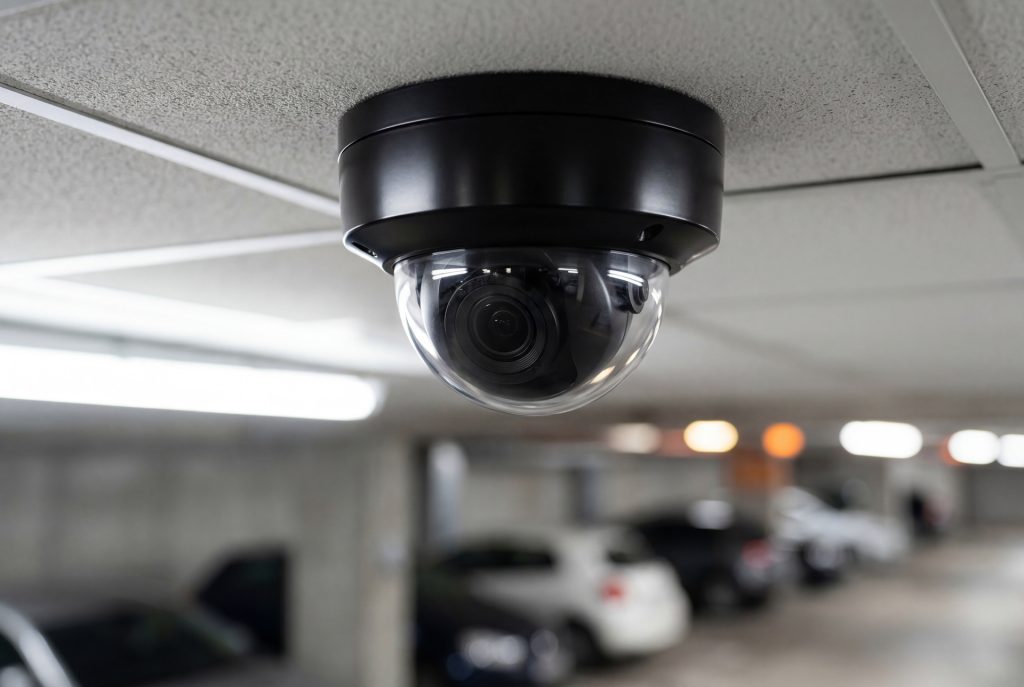
AI-Powered CCTV for Factories and Warehouses in Kenya: How Boardtac Solutions Is Making Video Investigation Faster and More Intelligent.
When CCTV Is No Longer Just About Watching Cameras
For many factories, warehouses, production facilities and large commercial properties in Kenya, CCTV has traditionally been installed for one primary purpose: recording what happens. But as facilities become larger and more complex, simply recording video is no longer enough.

A factory may have dozens of cameras covering production areas, warehouses, stores, loading bays, staff entrances, corridors, parking areas and external compounds. When something goes missing, a security incident occurs, or management needs to establish where a particular person has been, the challenge is no longer whether the cameras recorded the event.
The challenge becomes:
How quickly can the security team find the relevant footage?
This was exactly the type of requirement that Boardtac Solutions encountered during a customer engagement in Nairobi’s Industrial Area in August 2026.
The customer was looking for a CCTV solution that could help identify and trace where a particular individual had appeared within their site, including the factory, warehouse and production environment. They also wanted to make it easier to investigate missing items and establish where an item had been handled, who appeared around it, and approximately when the activity occurred.
The requirement was therefore much more advanced than conventional CCTV playback.
The customer needed a system designed around AI-assisted video investigation and rapid forensic search.
After assessing the requirement, Boardtac Solutions identified an advanced AI-based CCTV architecture capable of combining intelligent cameras, AI video analytics and intelligent video search to address the customer’s operational requirements.
The Customer Requirement: “Where Has This Person Been?”
One of the clearest requirements raised during the engagement was:
“Their main requirement is to be able to identify and trace where a particular individual has appeared within the site.”
This is an important distinction.
A conventional CCTV system normally requires an operator to know which camera was covering the area, approximately what time the event happened, how long the event lasted, which direction the person travelled and which cameras the person may have passed.
If those details are unknown, an investigation can quickly become a time-consuming exercise involving hours of video playback.
For a factory or warehouse with many cameras, this can become even more difficult.
A person may enter through one access point, move through a corridor, enter a production area, pass through a warehouse, approach a loading area and eventually leave through another part of the facility.
The security team may have to manually review multiple cameras to reconstruct that movement.
This is where AI-powered video search becomes particularly valuable.
From CCTV Playback to AI Video Investigation
The objective of an AI-enabled CCTV system is not necessarily to eliminate human investigation.
Instead, the objective is to make the investigation faster, more targeted and more efficient.
Modern AI video surveillance platforms can analyse recorded video and help users search for people, vehicles, objects, events and other visual characteristics.
This creates an entirely different way of interacting with CCTV.
Instead of starting with:
“Camera 17, 2:00 PM to 5:00 PM. Let us watch the footage.”
the investigation can become:
“Find the relevant person, vehicle or visual target.”
The system can then help narrow the search to relevant footage.
That can significantly reduce the amount of video an operator needs to review manually.
Why the Quality of the Cameras Matters
An AI CCTV system is only as useful as the information being captured by its cameras.
If the source image is dark, blurred, washed out or lacking useful detail, AI analytics and forensic investigation become more difficult.
This is why Boardtac Solutions focuses on selecting cameras according to the customer’s actual environment and investigation requirements.
Modern AI cameras can incorporate advanced image-processing technologies designed to improve visibility in difficult lighting conditions.
This is particularly important in industrial environments.
Factories do not always have perfect lighting.
There may be warehouses with dark aisles, production areas with mixed lighting, loading bays opening into bright outdoor areas, corridors with limited illumination, parking areas at night, vehicle headlights entering the camera scene and strong sunlight entering through factory doors.
A camera designed to preserve useful image information under these conditions gives the AI system better information to work with.
Low-Light Surveillance for 24-Hour Operations
Many factories operate around the clock.
A security system therefore cannot be designed only for daytime conditions.
At night, conventional cameras can lose important information. People may become silhouettes, vehicle colours can become difficult to distinguish and objects being carried may become harder to see.
Modern low-light AI cameras are designed to address these challenges by using improved sensors, wider apertures, intelligent image processing, wide dynamic range and other technologies.
For a factory or warehouse, this can help preserve useful information about people, vehicles and activities during both daytime and nighttime operations.
For security investigations, retaining useful colour and image detail can be particularly valuable.
For example, investigators may need to distinguish between a person wearing one colour of clothing and another, identify a vehicle by its colour, or understand what was happening around a particular location.
AI-Assisted Person Investigation Inside a Factory
Imagine a factory where an item has disappeared from a production area.
The investigation may begin with a simple question:
Who was in this area around the time the item disappeared?
With conventional CCTV, an operator may need to review several cameras manually.
With an AI-enabled architecture, the security team can use available search and metadata capabilities to narrow down relevant footage.
The investigation could involve:
- Establishing the approximate time of the incident.
- Identifying the relevant production area.
- Searching recorded footage for relevant people or visual characteristics.
- Reviewing the resulting video events.
- Determining where the person appeared next.
- Checking adjacent cameras.
- Following the person’s movement through the facility.
- Checking entrances, exits, warehouses and loading areas.
- Reviewing associated vehicle activity where applicable.
- Exporting relevant evidence for further investigation.
The system does not replace the security officer.
It helps the security officer find the right evidence faster.
Tracing Movement Across Different Areas
A large factory can effectively be treated as a collection of interconnected security zones.
For example:
Main Gate → Reception → Production → Warehouse → Stores → Loading Bay → Parking Area
A properly designed camera layout can provide overlapping coverage between these areas.
When combined with appropriate AI analytics, the security team can investigate how a target moved through the site.
This is especially useful where a customer needs to understand:
Where did the person first appear?
Which area did they enter?
Which direction did they travel?
Where did they spend time?
Did they approach a particular asset or storage area?
Did they enter a restricted area?
Which exit did they use?
Was a vehicle associated with the activity?
This is one of the strongest reasons for designing CCTV based on investigation requirements, rather than simply installing cameras wherever there is physical space.
Missing Items and Warehouse Investigations
Warehouses present a particularly strong use case for AI video investigation.
A missing item may have passed through several stages:
Receiving → Storage → Picking → Production → Dispatch
If the CCTV system is properly designed, the investigation can potentially reconstruct where the item was last seen and which people or vehicles appeared around the relevant areas.
AI-enabled cameras and video platforms can also provide object and target-related search capabilities depending on the selected equipment, configuration and supported analytics.
This means the security system can become an additional source of operational evidence.
Instead of CCTV being used only after a theft has occurred, it can support:
- Inventory investigations.
- Warehouse security.
- Restricted-area monitoring.
- Loading-bay monitoring.
- Production-floor security.
- Employee movement investigations.
- Vehicle movement investigations.
- Perimeter security.
- Incident reconstruction.
Vehicle Investigation and Parking Security
The same architecture can extend beyond people.
Factory parking areas can contain employees’ vehicles, visitors’ vehicles, suppliers’ vehicles, contractors’ vehicles and delivery vehicles.
Modern AI video systems can provide vehicle-related analytics that assist investigations involving characteristics such as vehicle type, colour and direction, depending on the selected technology.
This can be useful when investigating questions such as:
Which vehicle entered around the time of the incident?
What colour was the vehicle?
Which direction did it travel?
When did it leave the compound?
For higher-security entrances, Boardtac can also design dedicated vehicle and licence-plate capture solutions where the customer’s requirements justify specialised equipment.
The important principle is to select the camera according to the investigation requirement.
A general overview camera should not automatically be treated as a licence-plate camera.
Searching by Visual Characteristics
One of the major advantages of modern AI video surveillance is the ability to search using visual characteristics.
Depending on the equipment and analytics deployed, this can include characteristics associated with people and vehicles.
For example, an investigation may begin with information such as:
A person wearing a particular colour.
A person carrying a bag.
A particular type of vehicle.
A vehicle of a particular colour.
A person or vehicle moving in a particular direction.
These capabilities can help security personnel narrow down large volumes of video.
However, Boardtac Solutions believes it is important to set realistic expectations.
AI analytics should be used as an investigation and search tool, rather than being presented as an infallible method of identifying an individual.
Camera angle, lighting, distance, clothing, occlusion, image quality and environmental conditions can all affect results.
Why Camera Positioning Is Critical
AI does not eliminate the need for professional CCTV design.
In fact, AI makes correct camera positioning even more important.
At Boardtac Solutions, we approach an AI CCTV project by first understanding what the customer needs to establish from the video.
If the objective is general security, the camera may need to cover a large area.
If the objective is person investigation, the camera must provide an appropriate view of people moving through the area.
If the objective is vehicle identification, the camera needs the appropriate field of view, mounting position, lighting and image quality.
If the objective is licence-plate capture, a specialised camera and carefully controlled installation may be required.
If the objective is warehouse inventory investigation, cameras should be positioned to cover movement between receiving, storage, production and dispatch areas.
Therefore, AI CCTV should not be approached as:
“Buy AI cameras and install them.”
It should be approached as:
“Define the investigation problem, design the coverage, select the appropriate technology, configure the analytics and validate the results.”
Network Infrastructure Is Part of the AI CCTV Solution
A sophisticated camera system also requires a properly engineered network.
In a factory environment, dozens of IP cameras can generate significant network traffic.
Boardtac Solutions therefore considers:
- Camera bandwidth.
- PoE requirements.
- Gigabit switching.
- Network topology.
- VLAN configuration where appropriate.
- Uplink capacity.
- Recording bandwidth.
- Storage requirements.
- Cable distances.
- Fibre links where required.
- Network cabinet design.
- Power protection.
- Backup power.
- Environmental conditions.
This is one of the areas where professional installation makes a major difference.
A high-end AI camera connected through an improperly designed network does not deliver a high-end security system.
The complete infrastructure has to work together.
Storage Planning Is Equally Important
AI search is only useful if the relevant video has been retained.
Storage requirements depend on:
- Number of cameras.
- Camera resolution.
- Frame rate.
- Compression.
- Recording schedule.
- Continuous versus event recording.
- Required retention period.
- AI metadata requirements.
- Number of simultaneous streams.
- Customer investigation requirements.
For a factory, the retention requirement should therefore be established before finalising the recording and storage configuration.
The question is not simply:
“How many terabytes do we need?”
The better question is:
“How many cameras, at what quality, recording for how many days, with what investigation requirements?”
Designing CCTV Around the Factory’s Security Zones
A Boardtac industrial CCTV design can be divided into logical security zones.
Main Entrance
Monitor people, vehicles and general entry activity.
Reception and Access Areas
Monitor movement into the facility.
Production Areas
Monitor movement, restricted zones and operational activity.
Warehouse
Monitor storage areas, aisles, access points and movement of goods.
Loading and Dispatch
Monitor loading, unloading and vehicle activity.
Stores
Provide focused coverage for high-value inventory.
Staff Entrances
Monitor movement into and out of operational areas.
Perimeter
Monitor unauthorised movement and intrusion.
Parking Area
Monitor vehicles, people and movement within the compound.
Critical Equipment Areas
Provide focused surveillance around high-value machinery and infrastructure.
The final design should always be based on an on-site assessment.
CCTV as a Security Investigation Tool
The future of professional CCTV is moving beyond:
“What happened?”
towards:
“Find the event.”
This is a significant change.
As video volumes increase, manually reviewing footage becomes increasingly inefficient.
AI can help security teams move from passive video recording towards active video investigation.
With the appropriate architecture, an operator can start an investigation with a description of the target and use the system’s available AI search capabilities to narrow the relevant footage.
This is particularly relevant to factories, warehouses and other facilities where security teams may have to investigate large amounts of recorded video.
Boardtac Solutions’ Approach to Industrial CCTV
Our engagement in Nairobi’s Industrial Area demonstrated an important principle:
The right CCTV solution begins with the customer’s problem, not with a camera catalogue.
The customer did not simply approach Boardtac asking for a certain number of cameras.
They had an operational problem.
They wanted to know:
Where has a person been?
How can we investigate a missing item faster?
How can we determine who was around a particular area?
How can we reduce the amount of time spent playing back CCTV footage?
How can we improve security across production, warehouse and outdoor areas?
How can we investigate vehicles entering and leaving the premises?
Boardtac Solutions approached the requirement from that perspective.
After understanding the operational environment, we identified an advanced AI CCTV architecture designed around intelligent cameras, AI analytics and searchable video.
The proposed solution combines:
High-quality AI cameras.
Advanced low-light imaging.
AI target classification.
Searchable video.
Centralised recording.
Network infrastructure.
Storage designed around the required retention period.
Professional camera positioning.
AI configuration and testing.
Together, these components create a security platform designed around investigation rather than simple recording.
Why This Solution Can Be Worth the Higher Investment
An AI-enabled CCTV system can cost more than a conventional CCTV installation.
That is expected.
The customer is not purchasing only cameras and recording storage.
They are investing in:
Faster investigations.
Better visibility.
More useful recorded evidence.
Reduced manual playback.
Improved incident response.
Better understanding of movement around the site.
More intelligent perimeter monitoring.
Greater visibility across production and warehouse operations.
For a large manufacturing facility, the cost of an investigation is not simply the CCTV equipment.
There is also the cost of employees spending hours searching footage.
There is the cost of delayed investigations.
There is the potential cost of missing inventory.
There is the cost of production disruption.
There is the risk of security incidents going unresolved because the relevant footage could not be located quickly.
Therefore, the correct way to evaluate an AI CCTV system is not simply:
“How much more expensive is it than ordinary CCTV?”
The better question is:
“How much operational time and investigation effort can it save?”
AI CCTV Does Not Mean AI Will Know Everything
This is an important point for any responsible security technology provider.
AI video analytics are powerful tools, but they should not be marketed as infallible.
Search results depend on:
- Camera quality.
- Lighting.
- Camera angle.
- Distance from the target.
- Occlusion.
- Target visibility.
- Image quality.
- Network performance.
- System configuration.
- Supported analytics.
- Software and firmware capabilities.
- Environmental conditions.
AI should therefore be treated as an investigation accelerator, not as an unquestionable source of truth.
The final interpretation of an incident should remain with authorised security personnel and management.
This approach helps customers get the benefits of AI while maintaining realistic expectations.
What Boardtac Solutions Brings to the Project
Technology alone does not create a successful security system.
Boardtac Solutions brings together:
Site assessment.
Security requirement analysis.
Camera selection.
Network design.
PoE infrastructure.
Recording and storage planning.
Camera positioning.
AI configuration.
System commissioning.
Testing.
Customer training.
Technical support and maintenance.
Our role is to translate a customer’s operational requirement into a technically appropriate security architecture.
That is especially important when dealing with factories, warehouses, offices, apartments, commercial properties and other environments where CCTV is expected to do more than simply record.
The Future of CCTV in Kenya Is Becoming More Intelligent
Kenyan businesses are increasingly operating larger facilities with more employees, more vehicles, more inventory and more operational activity.
As the amount of CCTV footage increases, the value of intelligent search becomes increasingly important.
A system with 50 cameras may generate enormous amounts of recorded video.
A system with 100 cameras generates even more.
The challenge is no longer simply:
“Can we record everything?”
Modern security teams also need to ask:
“Can we find what matters?”
That is where AI-powered CCTV becomes valuable.
Boardtac Solutions: Turning CCTV Footage Into Searchable Security Intelligence
The Industrial Area customer engagement in August 2026 is an example of how Boardtac Solutions approaches modern CCTV projects.
The requirement started with a business problem:
Find and trace where a particular person has appeared within the site.
It expanded into a broader security requirement involving:
- Factory surveillance.
- Warehouse monitoring.
- Production-area security.
- Missing-item investigation.
- Person movement investigation.
- Vehicle monitoring.
- Parking surveillance.
- Faster CCTV playback and investigation.
- AI-assisted video search.
Boardtac identified an advanced AI CCTV architecture as a strong technical direction for the requirement.
The value of the solution is not simply the camera resolution.
It is the combination of:
Better image acquisition + AI analytics + searchable video + professional system design.
That combination can transform CCTV from a system that simply stores footage into a platform that helps security teams find, investigate and understand events faster.
For factories, warehouses and large commercial sites, that difference can be significant.
Frequently Asked Questions About AI CCTV for Factories and Warehouses
What is AI CCTV?
AI CCTV uses artificial intelligence and video analytics to detect, classify, search or analyse objects and activity captured by security cameras. Depending on the equipment, this can include people, vehicles, non-motor vehicles, movement, intrusion events and other visual characteristics.
Can AI CCTV trace where a person has been inside a factory?
AI-assisted CCTV can help locate a person’s appearances across compatible cameras and recorded footage, depending on camera coverage, image quality, supported analytics and system configuration. It should be regarded as an investigation aid rather than an infallible identification system.
Can CCTV help find a missing item in a warehouse?
Yes. A properly designed CCTV system can help investigators determine when and where an item was last visible and investigate people or vehicles appearing around the relevant area. AI search can reduce the amount of footage that needs to be manually reviewed.
Can AI CCTV identify vehicle colours?
Selected AI video surveillance systems support vehicle-related analytics and colour-based search or retrieval. The exact functions depend on the camera model, system configuration and enabled analytics.
Why is low-light CCTV important for factories?
Factories and warehouses often operate 24 hours a day and can contain areas with inconsistent lighting. Advanced low-light cameras can preserve more useful image information at night and in difficult lighting conditions, which can improve the quality of security footage available for investigation.
Is AI CCTV more expensive than ordinary CCTV?
Usually, advanced AI CCTV costs more because it involves higher-specification cameras, AI-capable recording hardware, appropriate networking, storage and professional configuration. The justification is the additional investigative and analytical capability rather than simply higher image resolution.
Does AI CCTV replace security guards?
No. AI CCTV should assist security personnel rather than replace them. It can help detect events, narrow searches and reduce manual video review, while trained personnel remain responsible for interpreting incidents and taking appropriate action.
Need an AI CCTV Assessment for Your Factory, Warehouse or Commercial Property?
If your organisation is currently spending too much time searching CCTV footage after an incident, simply adding more cameras may not solve the underlying problem.
The better approach is to assess what you need to find, where you need to find it, how long the footage must be retained, and what level of AI analytics is appropriate for the environment.
Boardtac Solutions can assess your site and design an AI-based CCTV architecture around your operational and security requirements, including factories, warehouses, production facilities, parking areas, commercial premises and large compounds.
Boardtac Solutions.
CCTV Installation | AI Video Surveillance | Network Infrastructure | Access Control | ICT Solutions
Kenya.
Website: www.boardtac.co.ke.