Why Your CCTV Cameras Go Off When Power Goes Off. Understanding Real CCTV Power Backup Solutions.
One of the biggest misunderstandings in CCTV installations is power backup.
Many customers believe that once a UPS is installed, the CCTV system will continue working for many hours during a blackout. In reality, most standard UPS units only keep a CCTV system running for a few minutes after power loss.
This becomes a serious problem during:
- Long power outages.
- Transformer failures.
- Planned maintenance blackouts.
- Power rationing.
- Remote site installations.
Ironically, security risks often increase during power outages, which is exactly when surveillance systems are needed most.
Why Most CCTV UPS Systems Last Only A Few Minutes.
A normal UPS is mainly designed for:
- Short-term backup.
- Safe equipment shutdown.
- Preventing sudden power interruption.
It is not designed to operate a full CCTV installation for several hours.
In many installations, the UPS only powers:
- The NVR or DVR.
- A network switch.
- A monitor.
And even then, runtime may only last:
- 5 minutes.
- 10 minutes.
- 20 minutes.
depending on:
- Battery size.
- Number of cameras.
- PoE switch load.
- Screen usage.
- Recorder power consumption.
The bigger the CCTV system, the faster a small UPS battery drains.
Why CCTV Systems Consume More Power Than Most People Think.
Modern CCTV systems are no longer just a recorder and a few cameras.
A professional IP CCTV installation may include:
- PoE network switches.
- Fiber media converters.
- Wireless links.
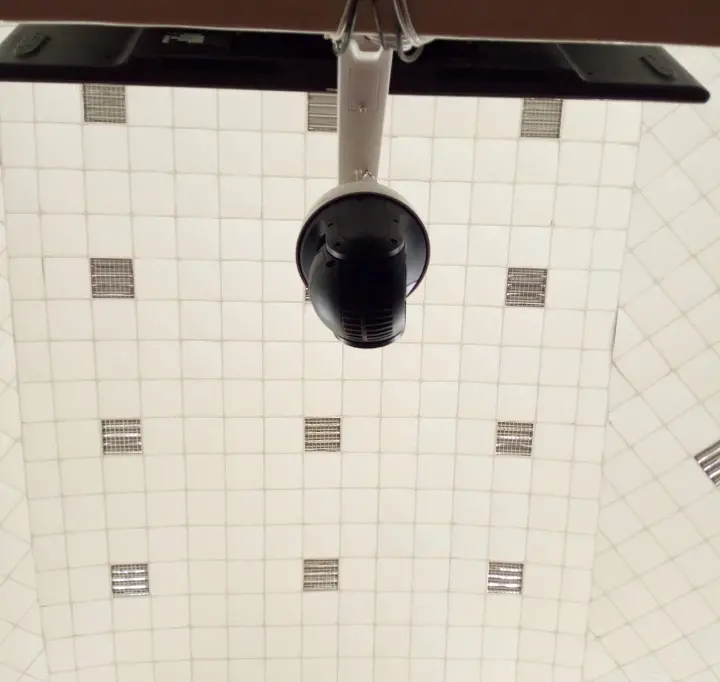
- PTZ cameras.
- Infrared illuminators.
- NVR storage systems.
- Network racks.
- Monitoring screens.
- Access control integration.
Some PTZ cameras alone consume significantly more power because of:
- Motorized movement.
- Infrared lighting.
- Auto-tracking features.
- Heater or blower systems in outdoor models.
In large office blocks, schools, estates, campuses, and apartment complexes, total CCTV power consumption can become substantial.
The Difference Between UPS Backup And True Long-Term CCTV Power Backup.
A standard UPS handles short interruptions.
But if the goal is to keep cameras online for:
- Several hours.
- Overnight outages.
- Entire weekends.
- Remote off-grid operation.
then a proper energy storage system becomes necessary.
This is where solar and battery-based backup systems become important.
Why Solar Battery Backup Is Becoming More Important For CCTV Systems.
A properly designed solar backup system can keep CCTV equipment running continuously even when utility power is unavailable for long periods.
The system usually includes:
- Solar panels.
- Charge controllers.
- Deep-cycle batteries or lithium batteries.
- Inverters.
- Power protection systems.
The batteries store energy that continues powering the CCTV infrastructure during outages.
Unlike a normal UPS battery designed for short discharge periods, solar storage batteries are designed for:
- Longer backup duration.
- Deep discharge cycles.
- Continuous energy supply.
Battery Sizing Is Extremely Important.
One common mistake is assuming any battery can support any CCTV system.
Proper sizing depends on:
- Number of cameras.
- Camera types.
- NVR power consumption.
- PoE switch load.
- Network equipment.
- Desired backup duration.
- Daytime solar charging capacity.
For example: A small 4-camera residential setup requires a very different backup design compared to:
- A school CCTV system.
- A campus surveillance network.
- An apartment complex.
- A warehouse installation.
If battery storage is undersized:
- Backup duration becomes very short.
- Batteries wear out quickly.
- Voltage instability affects equipment.
- Cameras may reboot repeatedly.
Why Some CCTV Systems Still Fail Even With Backup Installed.
Poorly designed backup systems often create problems such as:
- Cameras restarting continuously.
- NVR corruption.
- Hard disk failure.
- Voltage drops.
- Network switch instability.
- Inverter overload.
This happens when installers only focus on “having backup” instead of properly calculating the actual power demand of the entire CCTV infrastructure.
Professional CCTV Power Design Matters.
Reliable CCTV backup power requires understanding:
- Power consumption calculations.
- Battery capacity sizing.
- Solar charging efficiency.
- PoE load balancing.
- Surge protection.
- Equipment startup current.
- Environmental conditions.
Without proper design, even expensive backup systems may perform poorly.
Final Thoughts.
A normal UPS is useful for short-term protection, but it is not a long-duration power solution for large CCTV systems.
If the goal is continuous surveillance during extended power outages, the system requires properly calculated solar energy integration and adequate battery storage capacity based on the total CCTV load.
In modern security installations, power infrastructure is just as important as the cameras themselves.
At , we design CCTV power backup solutions including solar integration, battery storage systems, PoE infrastructure, and long-duration surveillance power systems for homes, schools, offices, apartments, estates, and commercial facilities across Kenya.