Securing Hospitality: A Comprehensive Guide to Hotel Door Access Control in Kenya
In Kenya’s rapidly growing hospitality industry, security is paramount. From boutique hotels in Nairobi’s Westlands to sprawling resorts along the Mombasa coast, property managers face the dual challenge of ensuring guest safety while delivering a seamless, modern experience. The days of traditional metal keys and mechanical locks are fading. They are replaced by sophisticated electronic access control systems that offer unprecedented convenience, security, and operational efficiency.


At Boardtac Solutions, we specialize in delivering cutting-edge door access solutions tailored to the unique needs of the Kenyan hospitality sector. This comprehensive guide explores everything you need to know about hotel door security, from system components and installation to emerging trends shaping the industry.
Table of Contents
- Why Modern Hotels Need Electronic Access Control
- Understanding Hotel Door Access Systems
- Types of Hotel Door Locks Available in Kenya
- Key Components of a Hotel Locking System
- Card Functionality and Access Levels
- Smart Technology: The New Frontier
- Installation Process and Considerations
- Troubleshooting Common Issues
- Why Choose Boardtac Solutions
- Future Trends in Hotel Access Control
Why Modern Hotels Need Electronic Access Control
Kenya’s hospitality sector has experienced remarkable growth, with new hotels, serviced apartments, and Airbnbs emerging across the country. This expansion brings increased competition and heightened security concerns. Traditional lock-and-key systems present several limitations.
Security Vulnerabilities: Physical keys can be copied, lost, or stolen, potentially compromising guest safety. Without audit trails, management has no record of who accessed a room and when.
Operational Inefficiencies: Front desk staff spend valuable time cutting keys, responding to lockout calls, and managing lost keys. These tasks detract from guest service.
Guest Experience Expectations: Today’s travelers, particularly business and tech-savvy guests, expect seamless, contactless experiences. They want to bypass reception queues and use their smartphones as room keys.
Scalability Challenges: As properties expand, managing hundreds of physical keys becomes logistically complex and insecure.
Modern electronic access control systems address these challenges comprehensively, offering:
- Enhanced Security: Biometric verification, encrypted credentials, and detailed audit trails.
- Operational Efficiency: Automated check-in and check-out, remote access management, and reduced staff workload.
- Guest Convenience: Multiple access methods including smartphones, RFID cards, and PIN codes.
- Scalability: Systems that grow with your property, easily adding new doors and access points.
Understanding Hotel Door Access Systems
A complete hotel access control system consists of several integrated components working together seamlessly. According to Boardtac Solutions’ technical documentation, a standard hotel locking system includes the following core components.
Core Components
Central PC/Server: Typically located at the reception desk or in a secure back office, this computer runs the hotel lock management software. It serves as the command center for programming cards, monitoring access events, and managing user permissions.
Encoder Device: This hardware connects to the central PC and programs key cards with specific access rights. The encoder writes data onto RFID cards, setting parameters such as valid dates, room assignments, and access levels.
Door Lock Hardware: Installed on each guest room door, these electronic locks contain the card reader, locking mechanism, and onboard memory for storing access logs and authentication data.
Key Cards: Available in various technologies such as RFID, magnetic stripe, or smart cards, these credentials grant access based on programmed permissions.
How the System Works
When a guest checks in, reception staff uses the management software to program a key card via the encoder. The card receives specific access rights, typically a single room for a defined date range. When the guest presents the card to the door lock, the lock reads the encrypted data. It verifies it against its internal clock and stored permissions and grants access if authorized. Every entry attempt is logged, creating a permanent audit trail.
Types of Hotel Door Locks Available in Kenya
The Kenyan market offers various lock technologies, each suited to different property types and budgets. Boardtac Solutions provides comprehensive installation services across Nairobi, Mombasa, Kisumu, and Eldoret.
RFID (Radio Frequency Identification) Locks
RFID technology has become the industry standard for hotel access control. These locks use 13.56MHz frequency cards that guests tap against the reader to unlock. The ZKTeco LH4000 and LH6000 models are popular choices in Kenya.
Advantages:
- Contactless operation eliminates wear and tear.
- Cards cannot be easily copied or demagnetized.
- Fast response time, typically under one second.
- Cards can be branded with hotel logos for marketing.
Typical Applications: All hotel types, from budget accommodations to luxury properties.
Biometric Locks
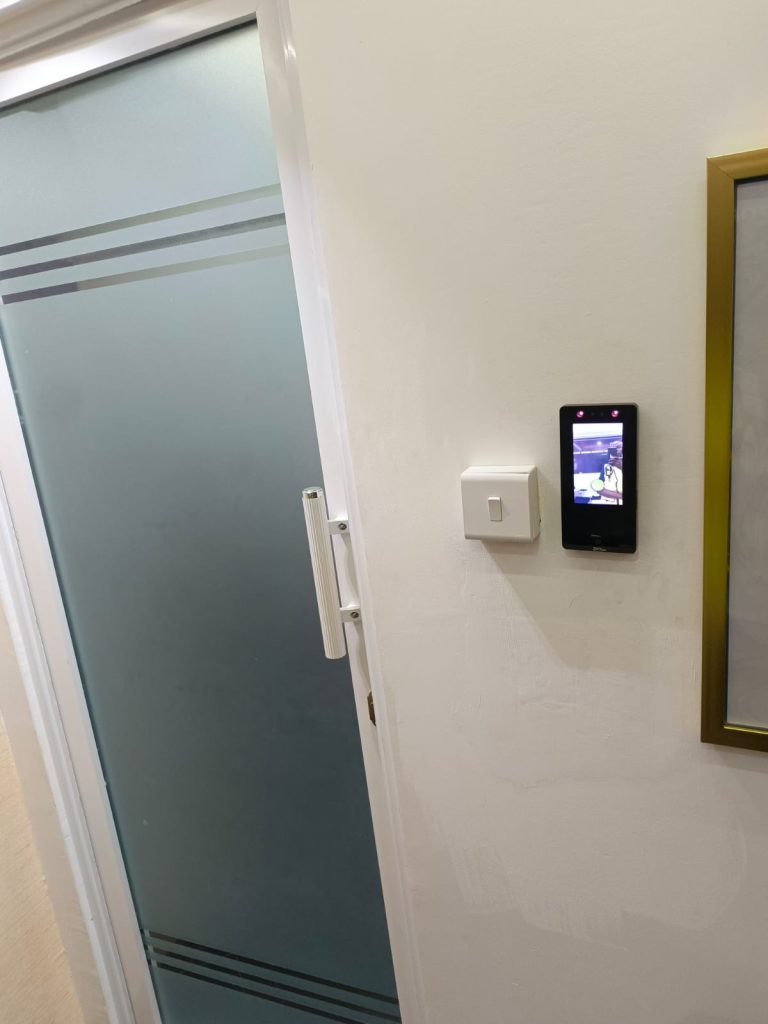
Biometric systems use unique physical characteristics such as fingerprints, facial features, or iris patterns for identification. While more common in high-security areas like server rooms or safes, some luxury hotels in Kenya are adopting biometric access for guest rooms.
Advantages:
- Credentials cannot be lost, stolen, or shared.
- Highest level of security available.
- Eliminates card management costs.
Typical Applications: Luxury suites, executive floors, and restricted access areas.
Smartphone/Mobile Access
The newest evolution in hotel access control allows guests to use their smartphones as room keys. Systems like ZKBio HLMS send guests a secure HTML5 link via SMS or email. This enables mobile check-in and door unlocking without app downloads.
Advantages:
- True contactless experience from arrival to departure.
- Eliminates physical card costs and management.
- Seamless integration with other hotel services.
Typical Applications: Modern hotels targeting tech-savvy travelers, serviced apartments, and Airbnbs.
Keypad/PIN Code Locks
These locks require users to enter a numeric code for access. Codes can be time-limited and changed between guests.
Advantages:
- No cards to manage or replace.
- Lower upfront costs.
- Simple operation.
Typical Applications: Smaller properties, hostels, and staff areas.
Key Components of a Hotel Locking System
Understanding the individual components helps hoteliers make informed purchasing decisions.
Electric Bolt Locks
For internal secure areas like server rooms, manager offices, or storage facilities, Boardtac Solutions offers Wi-Fi-enabled electric bolt locks with battery backup. These locks feature:
- Fail-safe operation: Lock remains secure during power outages.
- LED indicators: Visual confirmation of lock status.
- Auto-lock delay: Configurable timing for automatic re-locking.
- Multiple access methods: Smartphone app, RFID cards, or doorbell integration.
Power Supply Considerations
Kenya’s power grid can experience fluctuations and outages. Quality hotel lock systems incorporate:
- Battery backup: Ensures continuous operation during outages.
- Low-battery warnings: Alert staff before batteries fail, typically providing 30 days advance notice.
- Emergency power ports: Allow temporary external power if batteries deplete.
Management Software
The software platform is the brain of any hotel locking system. Key features to look for include:
- Centralized control: Manage all locks from a single interface.
- Audit trail reporting: Export access logs in Excel format for analysis.
- Integration capabilities: Connect with property management systems (PMS) for automated check-in and check-out.
- Remote access: Monitor and control locks from anywhere via cloud connectivity.
Card Functionality and Access Levels
One of the most powerful features of modern hotel access systems is the ability to assign different access levels to different users. This functionality ensures that every individual has precisely the access they need—and nothing more.
Common Access Levels
Guest Cards: These cards are programmed to open a specific guest room for a defined date range. They typically expire automatically at checkout time.
Master Cards: Held by management and housekeeping supervisors, these cards can open any guest room or staff area. They are strictly controlled and their usage is logged.
Housekeeping Cards: These cards open all guest rooms but are typically restricted to specific floors or zones. They often have time restrictions to prevent after-hours access.
Emergency Cards: Used only in critical situations, these cards override all lock settings and can open any door regardless of time restrictions or deadbolt engagement.
Staff Cards: Assigned to maintenance, restaurant, or security personnel, these cards grant access only to designated areas relevant to their duties.
Time Restrictions
Advanced systems allow administrators to set time-based restrictions on access cards. For example, a housekeeper’s card might only function between 8:00 AM and 5:00 PM. A maintenance staff card might only work on weekdays. This granular control significantly enhances overall property security.
Smart Technology: The New Frontier
The integration of smart technology is transforming hotel access control across Kenya. Boardtac Solutions is at the forefront of this evolution, implementing systems that offer:
Cloud-Based Management
Cloud-connected systems allow hotel managers to monitor and control access from anywhere with an internet connection. Whether you are on property or traveling, you can issue new credentials, revoke lost cards, and review audit trails in real time.
Mobile Credentials
As mentioned earlier, smartphone-based access is gaining traction rapidly. Guests appreciate the convenience of bypassing the front desk entirely. They can receive their digital key before arrival and go straight to their room upon arrival.
Integration with Property Management Systems
Modern access control platforms integrate seamlessly with popular property management systems. This integration enables automatic card programming during online check-in. It also allows for real-time synchronization of guest stays and automatic card expiration at checkout.
IoT-Enabled Locks
Internet of Things technology allows locks to communicate with other hotel systems. For example, when a guest unlocks their door, the system can automatically adjust the thermostat, turn on lights, and activate the “do not disturb” sign.
Installation Process and Considerations
Proper installation is critical to the performance and longevity of any hotel access control system. Boardtac Solutions follows a structured approach to ensure seamless implementation.
Step 1: Site Assessment
Our technicians conduct a thorough evaluation of your property. This assessment includes:
- Measuring door thickness and dimensions.
- Assessing existing door hardware and cutouts.
- Evaluating power availability and backup requirements.
- Identifying high-security areas requiring special attention.
- Determining optimal placement for encoders and management PCs.
Step 2: System Design and Proposal
Based on the site assessment, we develop a customized system design. This design specifies:
- Recommended lock models for each door type.
- Quantity of encoders and key cards required.
- Software configuration and integration requirements.
- Installation timeline and resource allocation.
Step 3: Pre-Installation Preparation
Before installation begins, we:
- Coordinate with property management to minimize disruption to guests.
- Pre-configure locks with default settings.
- Prepare all mounting hardware and tools.
- Train internal staff on basic system operation.
Step 4: Installation and Configuration
Installation involves:
- Removing existing door hardware.
- Installing new electronic locks, ensuring proper alignment and operation.
- Connecting encoders and management software.
- Configuring user permissions and access levels.
- Testing every lock thoroughly to verify functionality.
Step 5: Training and Handover
We provide comprehensive training to your front desk, housekeeping, and management teams. Training covers:
- Programming guest cards.
- Issuing staff credentials.
- Accessing audit trails.
- Responding to low-battery warnings.
- Basic troubleshooting procedures.
Step 6: Ongoing Support
Boardtac Solutions offers ongoing maintenance and technical support. Our team is available to address any issues promptly, ensuring minimal downtime for your operations.
Troubleshooting Common Issues
Even the most reliable systems can occasionally encounter issues. Here are common problems and their solutions.
| Issue | Possible Cause | Solution |
|---|---|---|
| Card not opening door | Expired card or incorrect programming | Re-program card at encoder. Verify date settings. |
| Lock not responding | Dead batteries | Replace batteries immediately. Check low-battery warning settings. |
| Encoder not programming cards | Connection issue or driver problem | Restart encoder. Check USB connection. Reinstall drivers if necessary. |
| Management software not syncing | Network connectivity issue | Check network cables. Verify server status. Restart software. |
| Green light but door remains locked | Mechanical misalignment | Inspect latch alignment. Adjust strike plate if needed. Contact support. |
Preventive Maintenance Tips
- Regular Battery Checks: Replace batteries every 12 to 18 months or when low-battery warnings appear.
- Firmware Updates: Keep lock and software firmware updated to ensure optimal performance and security.
- Periodic Testing: Test all locks monthly to verify proper operation.
- Spare Card Inventory: Maintain adequate stock of blank key cards to avoid delays during check-in.
Why Choose Boardtac Solutions
Boardtac Solutions has established itself as a trusted provider of hotel access control systems across Kenya. Our reputation is built on:
Local Expertise
We understand the unique challenges of the Kenyan hospitality market. From power reliability issues to varying property architectures, our solutions are designed to perform flawlessly in local conditions.
Quality Products
We partner with leading manufacturers such as ZKTeco to bring world-class technology to Kenyan hotels. Our products are rigorously tested for durability, security, and ease of use.
Comprehensive Service
From initial consultation to ongoing support, we offer end-to-end service. Our team handles installation, training, maintenance, and emergency repairs.
Competitive Pricing
We offer flexible pricing models tailored to properties of all sizes. Whether you are upgrading a small guesthouse or outfitting a large resort, we have solutions that fit your budget.
Proven Track Record
We have successfully deployed access control systems for numerous hotels, serviced apartments, and short-term rental properties across Nairobi, Mombasa, Kisumu, Eldoret, and beyond.
Future Trends in Hotel Access Control
The hotel access control industry continues to evolve rapidly. Here are trends that will shape the future of hospitality security in Kenya.
Biometric Integration
As biometric technology becomes more affordable, its adoption in hotel access will increase. Fingerprint and facial recognition systems offer unparalleled security and convenience, eliminating the need for physical credentials entirely.
Artificial Intelligence and Predictive Analytics
AI-powered systems will analyze access patterns to identify anomalies. For example, the system might flag multiple failed access attempts at a particular door or detect unusual entry times, alerting security personnel automatically.
Voice-Activated Access
Integration with smart speakers and voice assistants will allow guests to unlock doors using voice commands. This feature will appeal to tech-savvy travelers and enhance the overall guest experience.
Sustainable Solutions
Hotels are increasingly prioritizing sustainability. Future access systems will feature energy-efficient components, recyclable key cards, and reduced packaging waste.
Enhanced Integration with Hotel Operations
Access control will become increasingly integrated with other hotel systems, including:
- Lighting and climate control: Adjust room settings upon entry.
- Housekeeping management: Alert staff when guests check out.
- Minibar billing: Automatically charge purchases to guest accounts.
- Personalized guest experiences: Recognize returning guests and adjust room preferences automatically.
Conclusion
Investing in a modern hotel door access control system is no longer a luxury; it is a necessity for properties that prioritize security, efficiency, and guest satisfaction. The right system not only protects your guests and assets but also streamlines operations and enhances the overall guest experience.
Boardtac Solutions is your trusted partner in this journey. With our expertise, quality products, and commitment to service excellence, we help Kenyan hotels embrace the future of access control.
Ready to upgrade your property’s security? Contact Boardtac Solutions today for a consultation. Let us help you choose the perfect access control solution for your unique needs.
Boardtac Solutions – Securing Kenya’s Hospitality Industry, One Door at a Time.


hotel-telephone-systems-installation-in-kenya
hotels-communication-with-hotels-telephone-systems-in-kenya
boardtac.co.ke/hotels-door-locks
https://boardtac.co.ke/electronic-hotels-door-locks-in-kenya