The Boardtac Solutions Deployment Model: How Structured Project Delivery Creates Better CCTV, IT, Security, and Network Installations.
Many technology projects fail before installation even starts.
Poor planning, missing documentation, rushed deployments, and lack of testing often lead to unreliable CCTV systems, slow networks, failed biometric installations, and frustrated customers.
At Boardtac Solutions, projects follow a structured workflow known as the Boardtac Solutions Deployment Model (BSDM).
The deployment model provides a repeatable process that helps ensure projects are planned correctly, installed professionally, tested properly, and supported after completion.
Because successful installations are not accidents.
They are processes.
What Is the Boardtac Solutions Deployment Model?
The Boardtac Solutions Deployment Model is a structured project delivery framework used for:
- CCTV installations.
- Structured cabling projects.
- Biometric systems.
- Alarm systems.
- Networking projects.
- Solar-powered security systems.
- Access control installations.
- Computer lab installations.
- Enterprise IT infrastructure.
The model consists of six phases.
- Site Survey.
- Design and Planning.
- Material Verification.
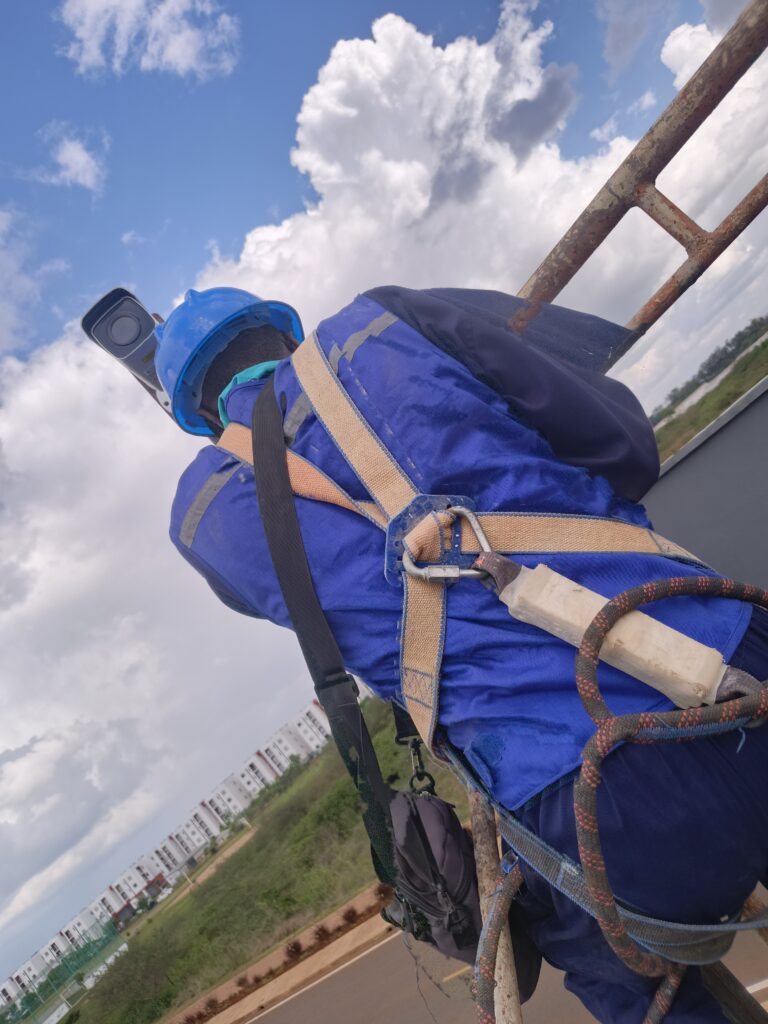
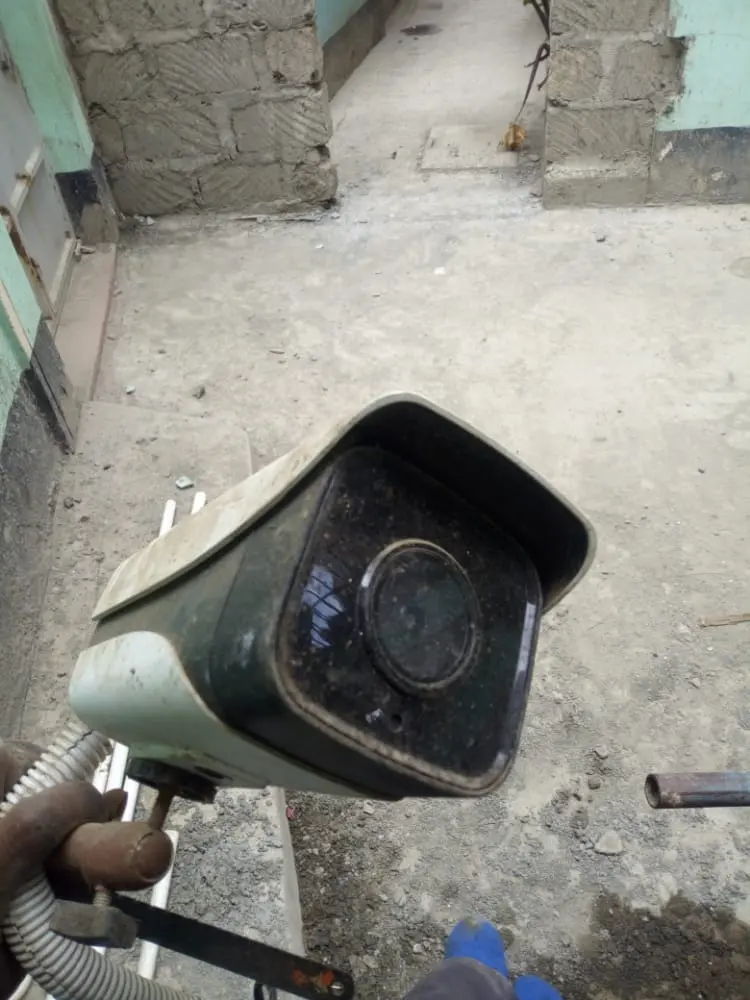
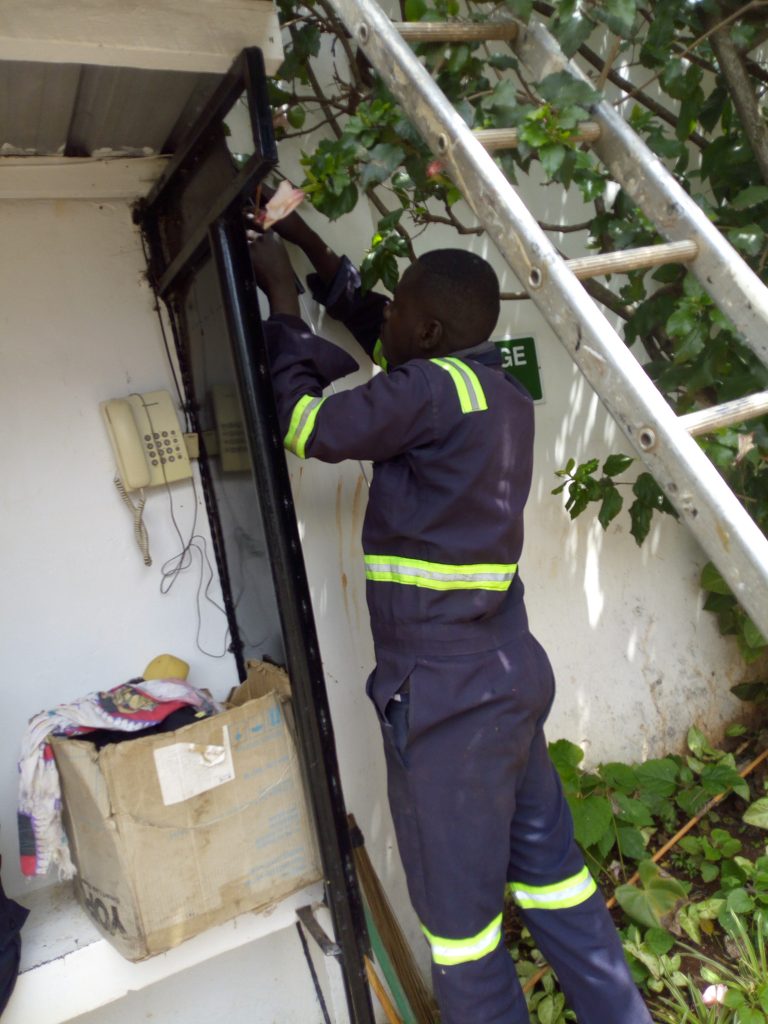
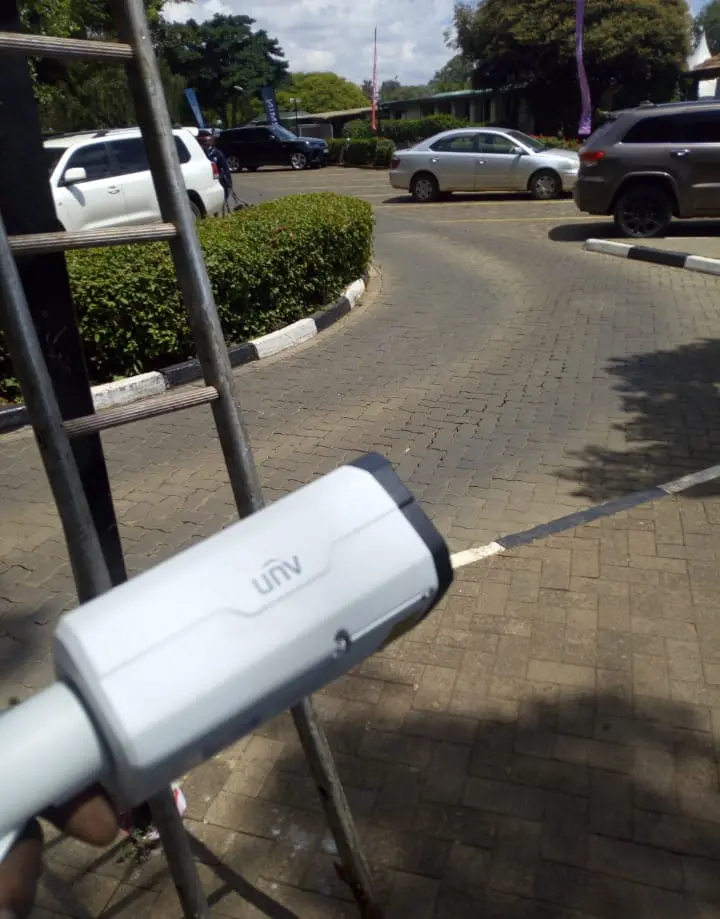
- Installation and Deployment.
- Testing and Commissioning.
- Handover and Support.
Each phase reduces risk and improves project quality.
Phase 1: Site Survey.
Every successful project begins with understanding the environment.
During site surveys, our engineers evaluate:
- Building layout.
- User requirements.
- Existing infrastructure.
- Power availability.
- Security risks.
- Environmental conditions.
- Expansion requirements.
Example.
Installing CCTV without surveying sunlight direction may result in poor image quality due to glare.
A proper survey prevents avoidable mistakes.
How this helps:
- Better planning.
- Reduced installation errors.
- Accurate quotations.
- Improved project outcomes.
Phase 2: Design and Planning.
After collecting information, project designs are created.
Planning includes:
- Camera layouts.
- Network topology diagrams.
- Device positioning.
- Storage calculations.
- Power calculations.
- Cable routing plans.
- Risk assessments.
Example.
A school computer lab may require dedicated switching infrastructure instead of connecting every workstation to a single switch.
Proper design improves scalability.
Phase 3: Material Verification.
Projects depend on correct materials.
Before deployment, verification checks include:
- Equipment quantities.
- Compatibility checks.
- Quality inspections.
- Model verification.
- Cable specifications.
- Connector validation.
Example.
Using incorrect cable categories in structured cabling projects may create performance bottlenecks.
Verification reduces delays.
Phase 4: Installation and Deployment.
This is where planning becomes reality.
Installation follows Boardtac Installation Standards for:
- Structured cabling.
- Labeling.
- CCTV placement.
- Alarm positioning.
- Rack organization.
- Equipment mounting.
Example.
Network cables should not be routed like electrical wiring.
Correct cable routing improves performance and maintenance.
Phase 5: Testing and Commissioning.
Installation alone does not guarantee success.
Every system undergoes testing.
This includes:
- Network testing.
- Camera verification.
- Alarm triggering tests.
- Biometric testing.
- Power testing.
- User acceptance checks.
Example.
A camera may power on correctly but still miss critical coverage areas.
Testing confirms performance.
Phase 6: Handover and Support.
Projects should remain maintainable after completion.
Handover includes:
- Documentation.
- User training.
- Password procedures.
- Warranty information.
- System demonstrations.
- Maintenance recommendations.
Support continues after deployment because technology environments change.
Example: How the Deployment Model Works in a School Computer Lab Project.
Without structured deployment:
- Cables may be poorly routed.
- Network points may remain unlabeled.
- Documentation may be missing.
- Troubleshooting becomes difficult.
Using the Boardtac Deployment Model:
Site survey identifies requirements.
Design creates proper network layout.
Materials are verified.
Installation follows standards.
Testing confirms performance.
Documentation supports future maintenance.
The result is a more reliable system.
Why Structured Deployment Matters.
Projects using structured deployment benefit from:
- Lower downtime.
- Better scalability.
- Easier troubleshooting.
- Faster maintenance.
- Reduced project risks.
- Better documentation.
- More predictable outcomes.
Frequently Asked Questions.
Why use a deployment model for ICT projects?
Deployment models reduce mistakes, improve consistency, and create more reliable installations.
Is project planning necessary for small projects?
Yes. Even small projects benefit from planning and documentation.
Why is testing important after installation?
Testing helps identify issues before users experience failures.
Does structured deployment reduce maintenance costs?
Yes. Organized systems are easier and cheaper to maintain.
Conclusion.
Technology projects should not depend on assumptions.
The Boardtac Solutions Deployment Model creates a structured approach that improves reliability, documentation, maintainability, and customer experience.
Because good projects are not only about installing equipment.
They are about following a process that works repeatedly.