Boardtac Installation Standards (BIS-01): Why Structured Cabling Labeling Standards Matter in Modern ICT Installations.
Poor labeling is one of the biggest reasons businesses experience network downtime, slow troubleshooting, and expensive maintenance. At Boardtac Solutions, structured cabling projects follow Boardtac Installation Standards (BIS-01): Structured Cabling Labeling Standard, a documentation and identification framework designed to make networks easier to manage, troubleshoot, and expand.
Whether it is a school computer lab, office network, CCTV installation, or data center, labeling standards directly affect reliability and maintenance.
What Is BIS-01 Structured Cabling Labeling Standard?
BIS-01 is Boardtac Solutions’ internal structured cabling identification standard used to organize and identify network infrastructure consistently.
The standard focuses on:
- Cable identification.
- Patch panel labeling.
- Data outlet naming.
- Rack documentation.
- Network point tracking.
- Maintenance friendliness.
- Expansion readiness.
The goal is simple: Every cable, outlet, cabinet, and network point should be identifiable within minutes.
Why Poor Labeling Creates Problems.
Many installations fail because cables are installed without documentation or naming systems.
Common problems include:
- Technicians unplugging wrong cables.
- Long troubleshooting times.
- Difficult office expansions.
- Confusion during equipment upgrades.
- Increased maintenance costs.
- Downtime during repairs.
A network with 100 cables that are not labeled can become difficult to maintain even for the original installer.
How BIS-01 Works.
Boardtac Solutions applies a structured naming convention across projects.
Example 1: Data Point Labeling.
Instead of writing:
Office cable.
Use:
GF-HR-01.
Meaning:
- GF = Ground Floor.
- HR = Human Resource Office.
- 01 = Network Point Number.
This immediately identifies location and function.
Example 2: Rack Labeling.
Instead of:
Blue cable.
Use:
R1-PP24-SW1-P12.
Meaning:
- R1 = Rack 1.
- PP24 = Patch Panel Port 24.
- SW1 = Switch 1.
- P12 = Switch Port 12.
A technician immediately knows where both ends terminate.
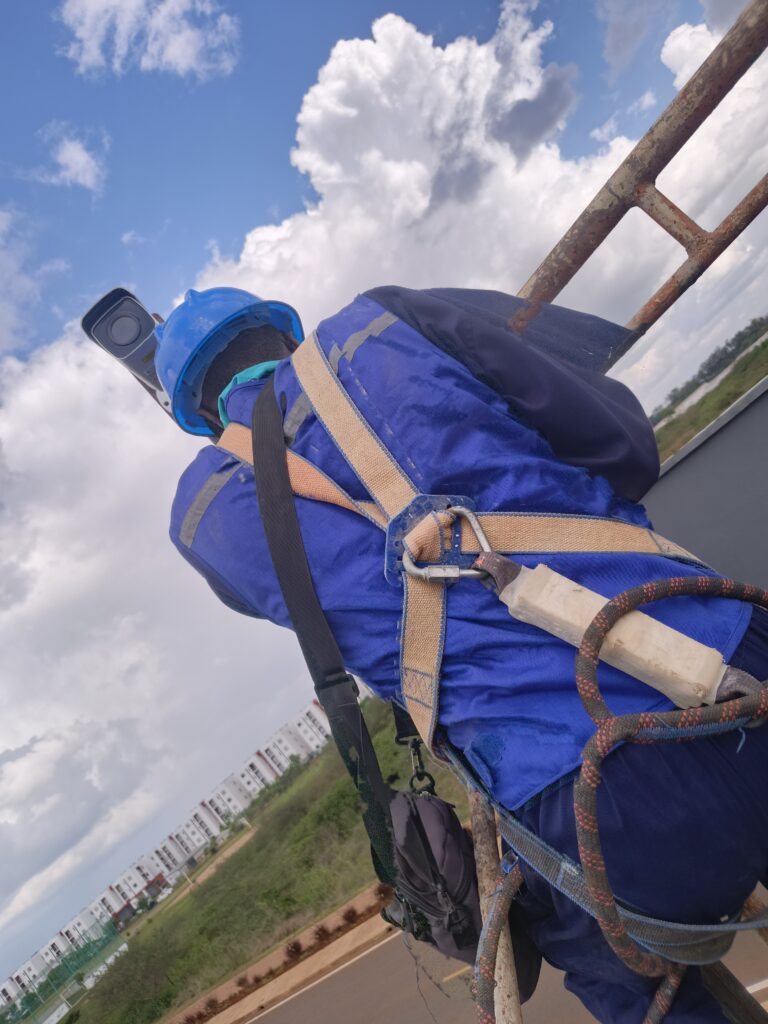
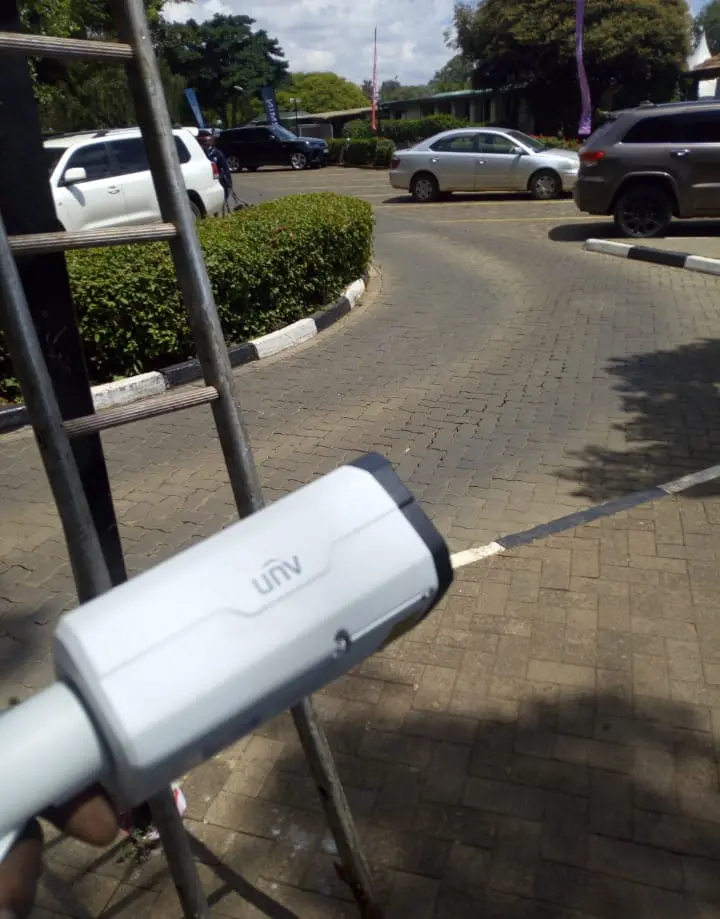
Example 3: CCTV Cable Identification.
Poor example:
Camera wire.
BIS-01 example:
CAM-EXT-05.
Meaning:
- CAM = Camera.
- EXT = Exterior.
- 05 = Camera Number.
This speeds up troubleshooting.
BIS-01 Labeling Rules Used During Installation.
Boardtac Solutions uses these rules during deployments:
1. Every Cable Must Have Two-End Labels.
Labels are placed:
- At source point.
- At destination point.
This prevents tracing confusion.
2. Labels Must Remain Readable.
Labels should:
- Resist fading.
- Resist moisture.
- Remain visible after installation.
3. Rack Equipment Must Match Documentation.
Everything in racks should match:
- Patch panel labels.
- Switch ports.
- Documentation sheets.
- Network diagrams.
4. Use Consistent Naming Conventions.
A project should not mix:
Office-1.
with:
RoomA.
and:
Cable23.
Consistency improves maintenance.
Example: School Computer Lab Installation.
Imagine a school lab with:
- 40 computers.
- 2 switches.
- 1 server cabinet.
- 48 network points.
Without BIS-01:
A faulty workstation cable may require checking dozens of cables manually.
With BIS-01:
LAB-A-PC22.
Immediately identifies:
- Computer Lab A.
- Workstation position.
- Exact cable route.
Troubleshooting becomes faster.
Example: Office Expansion Scenario.
A company adds 15 employees.
Without labeling:
Technicians spend hours tracing network points.
With BIS-01:
Unused points are immediately identifiable from documentation and labels.
Expansion becomes easier.
Documentation Requirements Under BIS-01.
Every completed installation should include:
- Cable schedules.
- Outlet maps.
- Rack layouts.
- Port assignments.
- Labeling sheets.
- Testing reports.
- Asset lists.
Documentation reduces dependency on specific technicians.
Frequently Asked Questions.
What is structured cabling labeling?
Structured cabling labeling is the process of assigning consistent identifiers to network cables, outlets, racks, and equipment to simplify maintenance and troubleshooting.
Why should businesses label network cables?
Proper labeling reduces downtime, speeds troubleshooting, and makes future upgrades easier.
Does labeling matter in small networks?
Yes. Even small networks become difficult to maintain without documentation and cable identification.
How often should labels be updated?
Labels should be updated whenever equipment, rack layouts, or network points change.
Conclusion.
A network installation is not complete when cables are connected. It is complete when future technicians can understand, troubleshoot, and expand it efficiently.
Boardtac Installation Standards (BIS-01): Structured Cabling Labeling Standard is designed to ensure every installation remains organized, maintainable, and scalable long after project completion.
Good cabling is invisible.
Good labeling makes infrastructure understandable.